 By Editorial Team
Amelia, a 32-year-old marketing professional, was just fed up with her bikini line. No matter how carefully she shaved or waxed, she always wound up with painful ingrown hairs and discoloration that made her self-conscious. She’d tried what felt like every scrub and cream on the market, but nothing gave her any real relief. It was her dermatologist who finally suggested she look into OTC retinol, a surprisingly gentle option for getting smoother bikini skin and better ingrown hair prevention. Was it possible an over-the-counter product could actually fix this problem for good?
Key Takeaways
- You have to start with a low concentration of OTC retinol (think 0.25% to 0.5%) and only apply it 2-3 times a week, working your way up slowly as your skin gets used to it.
- Retinol always goes on completely dry skin. After you cleanse, wait a good 10 minutes before you apply it to keep irritation at a minimum.
- Using a broad-spectrum SPF 30 (or higher) every single day is non-negotiable when retinol is in your routine, even on areas covered by clothing.
- For the best results with less irritation, pair your retinol with gentle exfoliation (like a salicylic acid wash) and a solid, non-comedogenic moisturizer that won’t clog pores.
- Don’t be surprised if you see some initial purging or feel a bit dry for the first 4-6 weeks. Real improvements in texture and a drop in ingrowns usually take 8-12 weeks of consistent use.
Amelia’s Journey: From Frustration to Smoothness
Amelia’s story is one I hear all the time. So many people, especially if they have thick or curly hair, are stuck in a cycle of chronic irritation and ingrowns on sensitive spots like the bikini line. The constant hair removal, shaving, waxing, you name it, just makes the inflammation and hyperpigmentation worse. For years, Amelia basically gave up, thinking this was just the price of being hair-free. She was definitely hesitant to put something like retinol on such a delicate area, worrying it would just cause more redness and peeling. Her dermatologist, Dr. Anya Sharma, reassured her that the newer over-the-counter retinol products are way milder than prescription retinoids, which makes them fine for sensitive spots if you introduce them correctly. “The key,” Dr. Sharma told her during the consult, “is starting low and going slow. People get into trouble when they jump in too fast and use too much, and then they blame the ingredient when the problem was really their aggressive application.” Following that advice, Dr. Sharma pointed her toward a 0.25% retinol cream and told Amelia to use it just two nights a week to start.
Confidence-boosting bikini & Brazilian waxing
Gentle, expert waxing that leaves you smooth for weeks. Find a trusted studio near you.
Find a Studio Near You →Understanding Retinol’s Mechanism for Bikini Skin
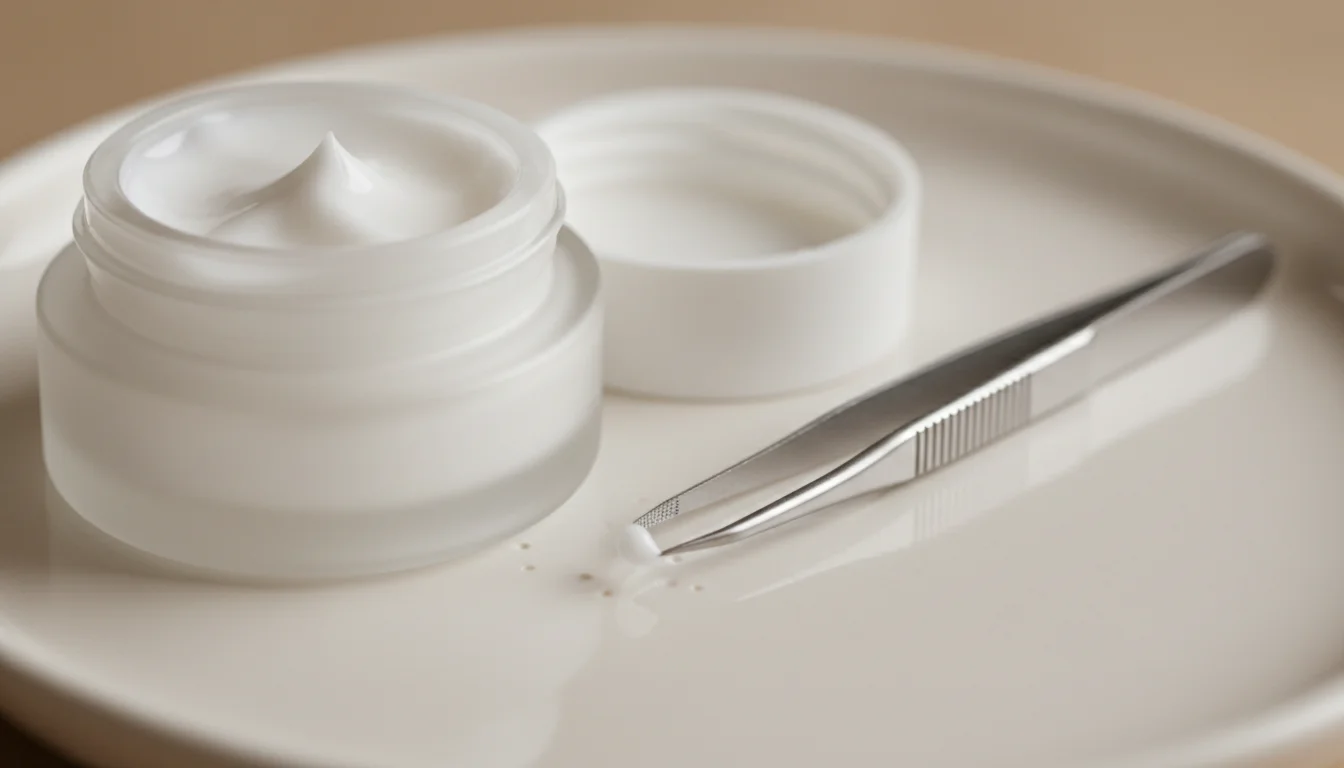
Retinol is a vitamin A derivative, and it works by basically telling your skin cells to turn over faster. That process is what helps shed the dead skin that can clog up hair follicles and cause ingrown hairs in the first place. On top of that, retinol helps calm inflammation and improve skin texture, which is why it’s so good at fading the post-inflammatory hyperpigmentation (those dark spots) that ingrowns leave behind. A 2024 study in the Journal of Clinical and Aesthetic Dermatology confirmed how well topical retinoids work for different kinds of acne and hyperpigmentation, showing they have a place beyond just facial skincare [Source: Journal of Clinical and Aesthetic Dermatology via NCBI https://www.ncbi.nlm.nih.gov/pmc/articles/PMC11019672/]. Amelia started her new routine cautiously. She’d wash the area with a gentle, fragrance-free cleanser, pat it totally dry, and then wait at least 10 minutes. That waiting period is important, because putting retinol on damp skin can make it penetrate too fast and cause irritation. She’d then apply just a pea-sized amount of the 0.25% cream over the problem spots and follow it up with a thick, occlusive moisturizer to create a buffer and add extra hydration.
The Initial Weeks: Managing Expectations and Side Effects
The first few weeks were a real test of Amelia’s patience. She did have some mild dryness and the area felt a little more sensitive, especially right after a wax. Dr. Sharma warned her this would happen, explaining that the “retinization” phase is just your skin getting acclimated. “It’s a common myth that if you’re not peeling, it’s not working,” Dr. Sharma had told her. “The real changes are happening under the surface, and a lot of peeling can actually be a bad sign that you’ve damaged your skin barrier.” Amelia was religious about keeping the area out of the sun and applying a broad-spectrum SPF 30 sunscreen every day, even when she was just wearing clothes that covered it. Sun protection isn’t a suggestion when you’re on retinol. It’s mandatory, since the ingredient makes your skin much more sensitive to UV damage, which can completely undo retinol’s work and make dark spots even worse. After about a month, she noticed the dryness was gone. The skin on her bikini line felt smoother, and she was definitely getting fewer new ingrowns. She still got a few, but they were smaller and less angry, and they healed faster. It was slow progress, but it was enough to make her stick with it.
Integrating Retinol with Hair Removal Practices
One of the biggest questions Amelia had was how to time the retinol around her waxing appointments. Dr. Sharma’s rule was simple: stop using retinol 3-5 days before you wax, and don’t start again until 3-5 days after, giving your skin time to recover. Since waxing itself is a pretty intense form of exfoliation, using retinol too close to an appointment is a recipe for over-exfoliated skin, which can lead to tears, burns, and serious irritation. On the mornings she didn’t use retinol, Amelia worked in a gentle chemical exfoliant, a salicylic acid wash. As a beta-hydroxy acid (BHA), salicylic acid is oil-soluble, meaning it can get down into the pores to clear out gunk, making it a great partner for ingrown hair prevention. By alternating these active ingredients, she gave her skin the benefits of both without completely overwhelming it. It’s a strategy some people call “skin cycling,” and it’s all about letting the skin get what it needs without causing a meltdown.
Long-Term Results and Maintenance
By the third month, the change in Amelia’s bikini skin was dramatic. The dark spots that had bothered her for years were almost gone, and the skin’s texture was smooth and even. Ingrown hairs went from a weekly battle to a rare, minor inconvenience. At this point, she was able to bump up her retinol use to every other night without any irritation. Consistent use of OTC retinol didn’t just fix her immediate problems. It actually improved the health and resilience of the skin in that area. It wasn’t a quick fix and it definitely took discipline, but the results were impossible to deny. For the first time in years, Amelia felt totally confident and comfortable with her bikini line. Her journey shows that solving specific skin issues often comes down to a smart, gradual approach, not just throwing aggressive treatments at the problem. You’re building healthier skin, not just masking symptoms.
Expert Tips for Gentle Retinol Use on Sensitive Areas
Using retinol on sensitive skin, like the bikini line, requires a bit of finesse if you want to get the benefits without all the side effects. First, product selection is paramount. You need to look for retinol products made for sensitive skin or stick to low concentrations, like 0.25% or 0.5%. Good formulas will often include soothing ingredients like ceramides, hyaluronic acid, or niacinamide to help offset any irritation. Always scan the ingredient list for things that could cause trouble, like heavy fragrances or certain essential oils. Second, the “sandwich method” can be a big deal if your skin is extra reactive. It’s simple: you apply a layer of moisturizer, let it sink in, apply your retinol, and then put another layer of moisturizer on top. This creates a buffer that slows down the retinol’s absorption, which makes it much more tolerable, even if it slightly dials back the potency. Better to be consistent with a buffered application than to be on-and-off because your skin is raw. Third, you have to listen to your skin. If you’re getting super red, feel a burning sensation, or are peeling for days, back off. Use it less often or take a break for a few days. Getting your skin to tolerate retinol isn’t a race. Pushing through bad irritation will only wreck your skin barrier and create more problems. As Dr. Sharma says, “Your skin will tell you what it needs. Don’t ignore its signals.” Finally, think about your overall routine. On the nights you use retinol, that should be your only powerful active. Don’t mix it in the same application with other strong exfoliants like AHAs or potent vitamin C serums. Alternate them on different nights instead. A simple routine on retinol nights, just gentle cleansing and good moisturizing, is the best way to support your skin’s barrier and help it adapt. Amelia’s success with OTC retinol shows what’s possible with patience and a smart strategy. It’s a powerful tool, but you get the best results when you respect the skin’s limits.
What concentration of OTC retinol should I start with for the bikini area?
You want to start with a low concentration, usually 0.25% to 0.5%. This lets your skin get used to the ingredient gradually and helps you avoid a big irritation flare-up.
How often should I apply retinol to the bikini area initially?
Start by applying it just 2-3 times per week, making sure to leave a day in between. You can slowly increase how often you use it once you’re sure your skin is handling it well.
Can I use retinol if I wax or shave my bikini area?
Yes, but you have to time it right. Stop using retinol for 3-5 days before and after you wax or shave. This prevents over-exfoliation, which can really damage your skin.
What are common side effects of using retinol on sensitive skin?
It’s pretty normal to experience some mild dryness, a little redness, and maybe some light flaking when you first start. This break-in period, called retinization, usually calms down within 4-6 weeks.
How long does it take to see results from OTC retinol for ingrown hairs and hyperpigmentation?
You should start seeing real improvements in your skin’s texture, plus fewer ingrowns and faded dark spots, after about 8-12 weeks of using it correctly and consistently.


