 By Editorial Team
Let’s talk about Sarah. She’s in her late 30s, loves the gym, and used to dread her annual beach trip for one reason: her bikini line. Despite a disciplined waxing routine, she was constantly fighting a losing battle with ingrown hairs and rough skin texture. She started hearing the buzz about at-home nano-needling and got curious. Could this little device really make a difference in her bikini prep, and could it possibly lead to some pain reduction when it was time to wax again? Was this a real solution or just more beauty industry hype?
Key Takeaways
- Get the technique right with at-home nano-needling, and you’ll see better skin texture and product absorption. Get it wrong, and you’re just asking for irritation, especially on sensitive spots.
- If you’re using this for bikini prep, you have to do it 7 to 10 days *before* any hair removal. The skin needs that time to heal so it’s less sensitive.
- Use a fresh, sterile, single-use cartridge every single time, and be militant about sanitizing your device and skin before and after. No exceptions.
- Follow up with soothing, non-comedogenic serums to get the best results and keep redness or dryness at bay.
- Some people find waxing hurts less after nano-needling, but it’s not a guarantee and definitely not a magic pain eraser. Your mileage may vary.
Sarah’s Dilemma: Seeking Smoother Skin and Less Discomfort
Sarah’s bikini line saga is one I hear all the time. For years, she was chained to a professional waxing appointment every four weeks. It worked, sure, but the aftermath was always a gamble of redness, irritation, and those infuriating ingrown hairs that would pop up no matter how much she exfoliated. “It felt like a constant battle,” Sarah told me. “I’d finally get one breakout of ingrowns to calm down, and a new one would start right before I had to go back. It made planning for a beach trip a total nightmare.”
Her esthetician, Maria, who’s been in the business for over 15 years, always preached about consistent skincare. “The skin in that area is so delicate and easily inflamed,” Maria would explain. “Anything that creates micro-trauma, and waxing is definitely that, can set off an inflammatory response that leads to hyperpigmentation and ingrowns if you don’t manage it.” Maria’s advice was all about gentle exfoliation and hydration, but Sarah felt like she needed a more proactive game plan.
The Allure of At-Home Nano-Needling
So Sarah went down the internet rabbit hole, scrolling through skincare forums and beauty blogs where everyone was talking about nano-needling. The concept was simple enough: a non-invasive tool using microscopic silicone or steel cones to open temporary, invisible channels in the top layer of the skin, which supposedly boosts product absorption and cell turnover without actually puncturing the dermis. This was different from microneedling, which goes deeper and is best left to pros. Nano-needling was sold as the gentle, do-it-yourself version. “The idea of finally getting a smoother, more even skin tone and maybe even stopping those ingrowns before they started… that really got my attention,” Sarah admitted. She ended up buying a popular at-home nano-needling pen from a well-known beauty retailer, making sure to get a pack of single-use cartridges.
Before she even unboxed it, Sarah hit the books. She pulled up articles from sources like the Journal of Clinical and Aesthetic Dermatology that discussed how nano-needling can improve skin texture and help products penetrate better. The general take was that even though it’s less aggressive than microneedling, you could still get real results if you did it right. And every expert she read harped on the same two things: sterility and proper aftercare.
Expert Insights: What Nano-Needling Actually Does
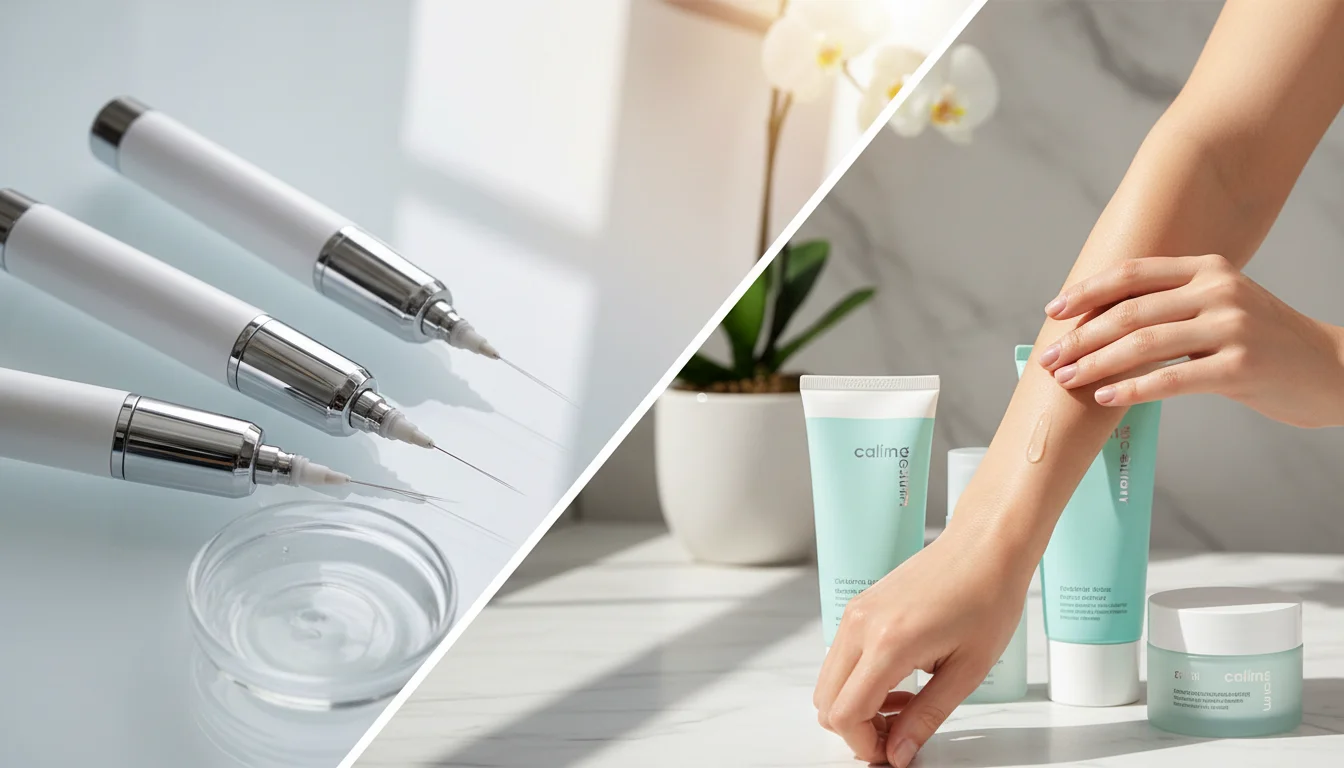
So what is this thing actually doing to your skin? Scientifically, at-home nano-needling works by creating a temporary state of transdermal delivery. Those little nano-cones, which are usually shorter than 0.15 mm, create transient aquaporin channels that let the active ingredients in your serums pass more easily through the stratum corneum (the skin’s tough outer wall). “Think of it like temporarily opening tiny gates on your skin’s surface,” explains Dr. Anya Sharma, a board-certified dermatologist out of Atlanta’s Buckhead area. “Making your skin more permeable like this lets your skincare products, think hyaluronic acid, niacinamide, or even gentle exfoliants, work much more effectively.”
Confidence-boosting bikini & Brazilian waxing
Gentle, expert waxing that leaves you smooth for weeks. Find a trusted studio near you.
Find a Studio Near You →But Dr. Sharma is quick to add a warning: “The ‘at-home’ aspect gives people a false sense of security.” Nano-needling won’t make you bleed or require downtime like microneedling, but if your technique is sloppy or you’re not clean, you can still end up with irritation, infection, or post-inflammatory hyperpigmentation, a risk that’s amplified on sensitive skin like the bikini line. Her advice is to always use a device with disposable, sterile cartridges and to clean the pen itself exactly as the instructions say. When you’re working on sensitive areas, you absolutely have to start gently and just watch how your skin reacts.
Sarah’s First Foray: Application and Immediate Aftermath
Armed with her new pen and a healthy dose of caution, Sarah scheduled her first session two weeks before her next wax, giving her skin plenty of recovery time. She followed the rules to a T: she cleansed the area, applied a slick of hyaluronic acid serum to help the device glide, and then gently moved the pen over her skin in small sections, carefully avoiding any irritation or bumps. “It just felt like a very, very fine-grit exfoliator,” she said. “There was no pain at all, just a little tingling.”
Immediately after, she slathered on a soothing, fragrance-free moisturizer packed with ceramides and centella asiatica to head off any redness. Her skin felt a bit sensitive for the next day, kind of like a very mild sunburn, which is totally normal. She was super careful, avoiding tight clothes, sun, and any other scrubs. “I kept hearing Dr. Sharma’s warning about irritation in my head,” Sarah said. “The last thing I needed was to create a new problem right before my vacation.”
The Bikini Prep Test: Waxing Day
The real moment of truth was on waxing day. By then, Sarah had nano-needled twice, with several recovery days in between each session. As her esthetician Maria got to work, Sarah braced herself for the usual sting… but it was different. “It obviously wasn’t painless,” she reported, “but that sharp, wince-inducing rip felt duller, less intense. And the redness afterward went away so much faster.” Maria even commented on it, noting that Sarah’s skin texture felt smoother and less congested than usual. “The skin just felt healthier,” Maria said. “The hairs seemed to come out more easily, which usually means the follicle isn’t as inflamed.”
Now, are there a bunch of definitive scientific studies proving nano-needling causes pain reduction during waxing? No. But we have tons of anecdotal stories like Sarah’s that suggest a strong link. The working theory is pretty simple: when you improve overall skin health, calm down chronic inflammation, and clear out the impacted follicles that cause ingrowns, the skin is just less reactive to the trauma of waxing. It’s something I’ve seen in my own practice, healthier skin just handles procedures better. You have to manage your expectations, though. Nano-needling isn’t a painkiller.
Long-Term Results and Considerations for At-Home Use
Sarah kept up her routine over the next few months, nano-needling about every 7 to 10 days while being fanatical about a clean environment and giving her skin time to rest. The results spoke for themselves. She saw a dramatic drop in ingrown hairs and the skin tone in her bikini area started to even out. “My skin just feels healthier now,” she said. “The texture is way smoother, and those little dark spots from old ingrowns are finally starting to fade.”
But for any of this to work at home, sterility and consistency are completely non-negotiable. The American Academy of Dermatology is always warning people about at-home devices, mainly because of the infection risk if you aren’t clean. That means disinfecting the device before and after you use it, always using a new sterile cartridge, and never, ever sharing it with someone else. It also means you don’t nano-needle over active pimples, open cuts, or any kind of skin infection. Common sense, right?
So when my clients ask about trying at-home nano-needling for their bikini prep, I give them a simple rule: start slow. Do a patch test first on a small, hidden spot. Use a gentle, hydrating serum during and after the treatment. And the most important part: you have to give your skin a full week, ideally ten days, to fully recover before you go get waxed or sugared. If you rush it, you’re just going to cause more irritation. The goal here is to improve skin health, not to attack it.
The Verdict: A Valuable Tool, With Caveats
Sarah’s story shows how at-home nano-needling can seriously improve your bikini prep by fixing skin texture and cutting down on ingrowns. Any pain reduction you feel during waxing is a great side effect of having healthier skin, but it shouldn’t be your main reason for doing this. This works, but it takes work. You have to be diligent, obsessive about hygiene, and know what the device can and can’t do. Getting smoother skin this way takes time and consistency.
For someone like Sarah, who’s willing to stick with a careful routine and learn the right technique, at-home nano-needling is a fantastic tool for getting a more resilient bikini line and feeling more confident on vacation. Just remember, skin health and safety come first. Always.
What’s the real difference: nano-needling vs. microneedling?
Nano-needling uses tiny cones (under 0.15 mm) to create temporary channels on the skin’s surface (the stratum corneum), mainly to help products sink in better. It doesn’t break the skin. Microneedling uses actual needles (0.25 mm and up) to create controlled injuries deeper in the dermis to stimulate collagen, which means potential bleeding and downtime, and is why it’s best done by a pro.
How often for bikini prep?
On a sensitive spot like the bikini line, don’t do it more than once every 7 to 10 days. That gives the skin plenty of time to recover and prevents you from making it raw or irritated. Pay attention to how your skin feels and back off if you need to.
What kind of serums should I be using with this?
Stick with gentle, hydrating, and non-comedogenic serums, things with hyaluronic acid, niacinamide, peptides, or soothing ingredients like centella asiatica are perfect. Don’t even think about using strong actives like retinoids, high-strength acids (AHAs/BHAs), or even vitamin C right after a session. You’ll just cause a major reaction. Save the heavy hitters for your off days.
Will it actually help with my ingrown hairs?
Yes, it can. By improving the texture and helping your skin turn over cells more efficiently, nano-needling helps stop dead skin from clogging up hair follicles, a primary cause of ingrowns. It also helps your anti-ingrown serums work better. It’s all about consistent, gentle exfoliation.
Is at-home nano-needling safe for everyone?
It’s generally safe for most skin types, but if you have super sensitive skin, an active flare-up of something like eczema or psoriasis in that area, or you’re known to get keloid scars, you need to be extremely careful or just talk to a dermatologist first. Always, always do a patch test before you go all-in on a large area.


