 By Editorial Team
Sarah, a vibrant entrepreneur in her late 30s, had built a thriving organic skincare line, “Bloom & Glow,” right here in Atlanta’s bustling Old Fourth Ward. Her social media was impeccable, her product reviews stellar. But beneath the surface, Sarah harbored a secret dread: her annual laser resurfacing appointment. Each year, the anticipation of discomfort made her stomach churn. She’d tried various over-the-counter creams, but they never quite hit the mark, leaving her anxious and less than thrilled about a procedure she knew was beneficial for her skin health. What if there was a better way to tackle numbing and pre-appointment prep, transforming dread into a routine, even pleasant, experience?
Key Takeaways
- Topical anesthetics containing lidocaine and prilocaine are highly effective for pain management during cosmetic procedures, with specific formulations offering deeper penetration.
- Effective pre-appointment preparation includes meticulous skin hydration, avoiding certain supplements and medications, and precise timing of numbing cream application for optimal results.
- Always consult with your dermatologist or aesthetician to tailor a numbing and prep strategy that aligns with your individual skin type and the specific procedure you’re undergoing.
- A consistent, gentle skincare routine in the weeks leading up to your appointment significantly enhances skin receptivity to treatments and minimizes post-procedure downtime.
- Choosing a reputable clinic that prioritizes patient comfort and provides clear, detailed pre-care instructions is just as important as the numbing agents themselves.
The Unseen Battle: Sarah’s Quest for Comfort
Sarah’s problem isn’t unique. Many of my clients, especially those new to advanced cosmetic treatments like microneedling, laser hair removal, or even injectables, share similar anxieties. The idea of discomfort can be a significant barrier, even when they understand the long-term benefits for their skin health. I remember a client last year, Mark, who was so nervous about his first tattoo removal session that he almost canceled. His previous experience with a different clinic involved minimal numbing, and he described it as “excruciating.” We had to rebuild his trust from the ground up, starting with a comprehensive numbing strategy.
For Sarah, her laser resurfacing was an investment in her brand – a testament to the efficacy of thoughtful skincare. But the process itself felt like a necessary evil. “I just wish I could walk in feeling calm, not like I’m bracing for impact,” she confessed during our initial consultation at my Buckhead clinic, just off Peachtree Road. Her skin, while well-maintained, showed signs of mild sensitivity, which meant a generic numbing approach simply wouldn’t cut it. My first piece of advice to her was direct: forget everything you think you know about over-the-counter numbing creams. They’re often too weak, too inconsistent, and frankly, a waste of your money for anything beyond a superficial sting.
Understanding Topical Anesthetics: The Real Science Behind Numbing
When we talk about effective numbing and pre-appointment prep, we’re primarily discussing topical anesthetics. These aren’t just “pain relievers” in the traditional sense; they work by temporarily blocking nerve signals in the treated area. The active ingredients you want to look for are lidocaine, prilocaine, benzocaine, and tetracaine. For most in-office procedures, a combination of these, often in higher concentrations than what’s available without a prescription, is what truly makes a difference. I’m talking about compounds with 20-23% lidocaine and 7-8% tetracaine, specifically formulated for deeper dermal penetration. These are prescriptions, and for good reason—they need to be used correctly and safely.
According to a comprehensive review published in the Journal of Clinical and Aesthetic Dermatology, the efficacy of topical anesthetics is directly related to their concentration, formulation (e.g., cream vs. gel), and the duration of application. Simply slapping on a thin layer five minutes before your appointment is like bringing a spoon to a sword fight – utterly ineffective. We need to allow these agents ample time to penetrate the skin layers and do their job. For Sarah’s laser resurfacing, we planned for a full 60-90 minutes of application under occlusion, meaning we covered the cream with a thin plastic film to enhance absorption.
Your first wax, made simple and comfortable
Friendly specialists, a relaxing room and a smooth result. Find a welcoming studio near you.
Find a Studio Near You →The Art of Pre-Appointment Prep: More Than Just Numbing
Numbing is only one piece of the puzzle. The condition of your skin leading up to the appointment plays a huge role in both the procedure’s effectiveness and your overall comfort. Think of it this way: a well-hydrated, healthy canvas responds much better to treatment than dry, irritated skin. This is where meticulous skin health routines come into play. For Sarah, this meant a strict regimen for two weeks prior to her laser session.
- Hydration, Hydration, Hydration: We emphasized a consistent use of a rich, emollient moisturizer twice daily. I recommended a hyaluronic acid serum followed by a ceramide-rich cream. Why? Because hydrated skin has a stronger barrier function, which reduces sensitivity and can even aid in the penetration of numbing creams.
- Sun Protection is Non-Negotiable: Any aesthetician worth their salt will tell you this. Sun exposure, even incidental, can make your skin more reactive and increase the risk of post-inflammatory hyperpigmentation after laser treatments. Sarah, thankfully, was already a pro with her SPF 50+, but it’s a critical point for everyone.
- Avoiding Irritants: This is a big one. For at least 7-10 days before her appointment, Sarah paused all retinoids, alpha hydroxy acids (AHAs), beta hydroxy acids (BHAs), and abrasive physical exfoliants. These ingredients, while beneficial long-term, can increase skin sensitivity, making numbing less effective and post-procedure recovery more challenging.
- Medication and Supplement Review: This is a step many people overlook, but it’s vital. Certain medications and supplements can increase bruising or bleeding risk. I always advise my clients to avoid blood-thinning supplements like high-dose Vitamin E, fish oil, ginkgo biloba, and garlic for at least a week prior. Aspirin and NSAIDs (like ibuprofen) should also be discussed with your prescribing physician. Sarah, for instance, took a daily omega-3 supplement, which we paused for 10 days.
One common mistake I see? Clients who decide to try a new, “miracle” skincare product a week before their appointment. Please, don’t do it! Stick to your tried-and-true, gentle routine. Introducing new variables right before a procedure is just asking for trouble, like showing up to a marathon having just swapped your running shoes for brand new, untested ones. It might seem like a small thing, but consistency is king for optimal skin health outcomes.
The Numbing Protocol: Timing and Technique
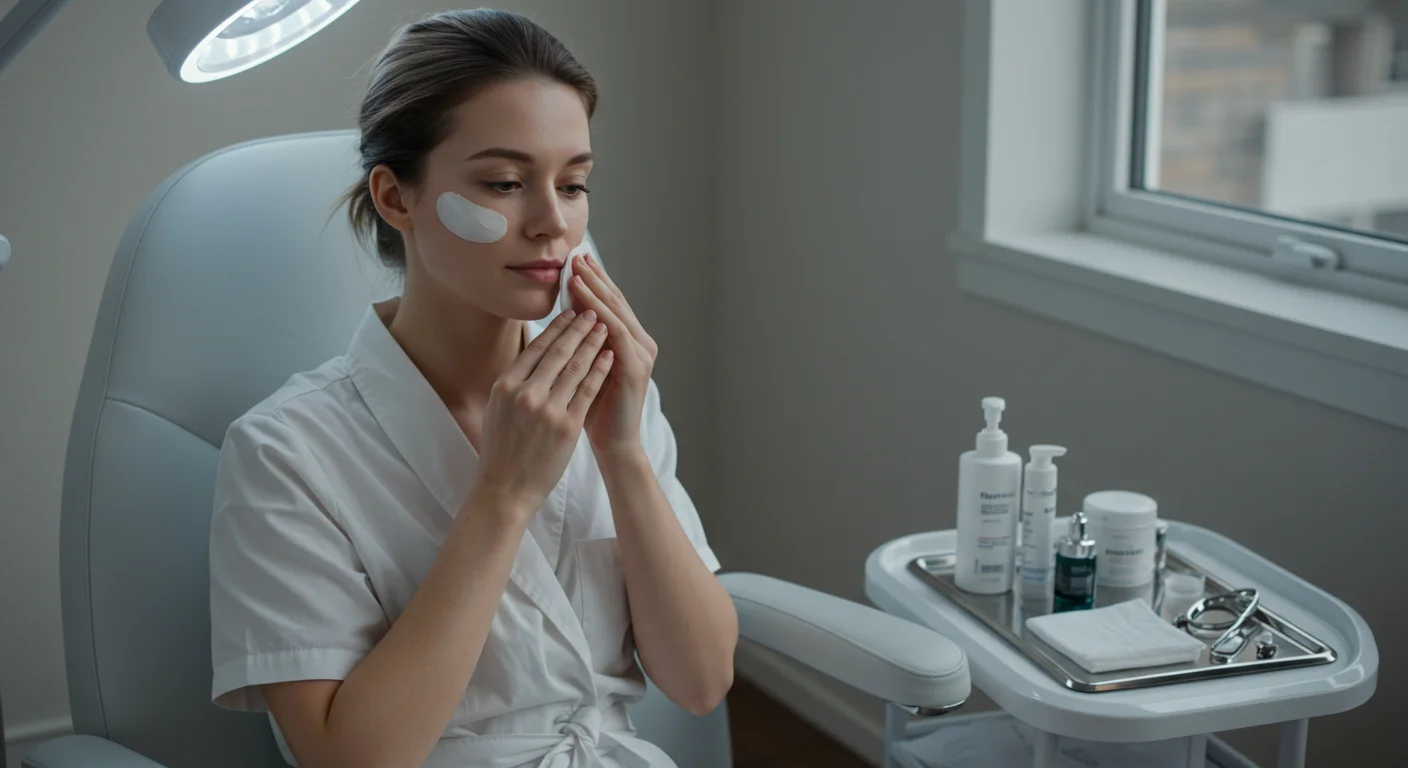
For Sarah’s laser resurfacing, we implemented a precise numbing protocol. My clinic uses a compounded topical anesthetic, a bespoke blend often stronger and more effective than off-the-shelf options. This isn’t something you pick up at your local CVS in Midtown. We apply a thick, even layer to the treatment area, then cover it with an occlusive dressing – typically a clear plastic film. This keeps the cream moist and helps drive the active ingredients deeper into the skin. For laser resurfacing, we aim for a minimum of 60 minutes, sometimes up to 90 minutes, before the procedure begins. This allows for maximum anesthetic absorption, leading to significantly reduced sensation.
I distinctly remember a client who arrived for a significant scar revision treatment, having applied a thin layer of over-the-counter lidocaine cream just 15 minutes prior. She was convinced it would be enough. It wasn’t. We had to delay her appointment, re-apply our stronger compound, and wait the full hour. The difference in her comfort level was night and day. It’s not just about the cream; it’s about the method. Proper occlusion and sufficient time are absolutely critical. Without it, you’re just surface-level. You’re not getting to the nerves that actually transmit the pain signals.
When selecting a clinic for any procedure involving discomfort, inquire about their numbing protocols. Do they offer prescription-strength topical anesthetics? What is their application technique and wait time? A clinic that rushes this step is, in my opinion, compromising patient comfort and potentially, the treatment outcome. At my practice, patient comfort is paramount, and we factor in the necessary numbing time into every schedule. It’s non-negotiable. We even have a cozy waiting area with noise-canceling headphones and calming music for this very purpose – a small detail that makes a huge difference.
The Resolution: From Dread to Delight
The day of Sarah’s laser resurfacing arrived. She came in looking noticeably calmer than previous years. We applied the compounded numbing cream, covered it, and she relaxed in our lounge for 75 minutes, catching up on emails. When it was time for her treatment, the transformation was remarkable. “I can feel pressure, but barely any discomfort,” she reported, a genuine smile replacing her usual anxious frown. The procedure, which typically took her breath away with each pulse, was now manageable. She even chatted amiably with our aesthetician throughout.
The outcome? Not only was her experience dramatically improved, but her recovery was also smoother. Because her skin was optimally prepped – hydrated, calm, and protected – it responded beautifully to the laser. Her redness subsided faster, and her post-procedure sensitivity was minimal. The meticulous numbing and pre-appointment prep had paid off, not just in comfort, but in enhancing the overall results for her skin health.
Sarah left our clinic that day not with a sigh of relief, but with a spring in her step. “That was genuinely the best laser experience I’ve ever had,” she told me, “I almost forgot what I was there for.” She’s already booked her next appointment, and the dread is gone. That’s the power of a well-executed plan. It’s about taking control of your experience and ensuring your journey to better skin is as comfortable and effective as possible.
My advice to anyone considering an aesthetic procedure is this: don’t settle for discomfort. Demand a clear, comprehensive pre-care plan from your provider, especially regarding numbing. Your comfort, and ultimately your results, depend on it. Invest in your skin’s health, and invest in a clinic that respects your experience.
What are the best active ingredients for topical numbing creams?
The most effective active ingredients for topical numbing creams are lidocaine, prilocaine, benzocaine, and tetracaine. For in-office procedures, compounded creams often combine these in higher concentrations (e.g., 20-23% lidocaine) for deeper penetration and superior pain relief.
How long before my appointment should I apply numbing cream?
For optimal results, topical numbing cream should typically be applied 60-90 minutes before your appointment, especially for procedures like laser resurfacing or microneedling. It’s crucial to follow your provider’s specific instructions, as timing can vary based on the cream’s formulation and the procedure type.
What should I avoid in my skincare routine before a cosmetic procedure?
You should avoid retinoids, AHAs, BHAs, and physical exfoliants for at least 7-10 days prior to your appointment. These ingredients can increase skin sensitivity, potentially reducing numbing effectiveness and prolonging recovery. Stick to a gentle, hydrating routine.
Can certain supplements interfere with numbing or recovery?
Yes, certain supplements like high-dose Vitamin E, fish oil, ginkgo biloba, and garlic can increase bruising or bleeding risk. Always discuss all medications and supplements with your provider, and they may advise you to pause specific ones for 7-10 days before your procedure.
Why is occlusion important when applying numbing cream?
Occlusion, or covering the numbing cream with a plastic film, helps to keep the cream moist and enhances the penetration of the active ingredients into the deeper layers of the skin. This significantly improves the cream’s efficacy, leading to more profound and long-lasting numbness during the procedure.


