 By Editorial Team
For too long, the experience of professional hair removal has been a guessing game, leaving clients and technicians frustrated by unpredictable results and discomfort. We’ve all seen the aftermath: irritated skin, lingering pain, or worse, adverse reactions that undermine the entire service. The core problem? A lack of objective, verifiable data regarding client comfort and skin response. Imagine a future where every waxing session is tailored precisely to an individual’s unique biological profile, guided by a comfort-and-pain evaluation site built around measurable comfort factors: wax type, and skin health. How can we transform this vision into a tangible reality?
Key Takeaways
- Implement AI-driven dermatological analysis to objectively score client skin health pre-service, providing a baseline for personalized wax selection.
- Integrate real-time, sensor-based feedback during waxing to quantify pain response, allowing for immediate adjustments and data collection.
- Develop a proprietary algorithm that correlates wax formulation, application technique, and individual skin biometrics with comfort scores to predict optimal treatment protocols.
- Establish a standardized industry certification for comfort evaluation specialists, ensuring consistent data collection and interpretation across practitioners.
The Problem: Subjectivity, Guesswork, and Client Dissatisfaction
The beauty industry, particularly in services like waxing, has historically relied on anecdotal evidence, technician experience, and client self-reporting. While valuable, these methods are inherently subjective and often lead to inconsistent outcomes. I had a client last year, Sarah from Buckhead, who came to us after a disastrous waxing experience at another salon. Her skin was severely inflamed, and she was convinced she was allergic to wax. After a thorough consultation, we discovered the issue wasn’t an allergy, but rather a combination of her underlying sensitive skin condition, exacerbated by a wax formula ill-suited for her skin type and an overly aggressive application technique. This isn’t an isolated incident; it’s a systemic issue.
The core of the problem lies in the absence of quantifiable metrics for two critical factors: skin health and comfort levels during waxing. Technicians often assess skin visually, making judgments based on texture, redness, or dryness. But what about the underlying cellular health, hydration levels, or microscopic inflammation not visible to the naked eye? Similarly, pain is a personal experience, notoriously difficult to measure objectively. A client might say, “It hurt a lot,” but what does “a lot” truly mean when comparing one person’s pain threshold to another’s? This ambiguity creates a significant gap in service quality and client trust.
This lack of data leads to a cycle of trial and error. Technicians try different waxes, hoping to find one that works. Clients endure varying degrees of discomfort, sometimes silently, sometimes vocally, but always with a sense of uncertainty. The result? Dissatisfied customers, reduced repeat business, and a lingering perception that waxing is an inherently painful and unpredictable service. We’re leaving money on the table and, more importantly, failing to deliver the premium, personalized experience clients expect in 2026.
What Went Wrong First: The Pitfalls of “One-Size-Fits-All” and Vague Feedback
Early attempts to address this problem often fell short because they didn’t tackle the root cause. Many salons tried simply offering a wider range of wax types – hard wax, soft wax, sugar wax – assuming more choices would solve the problem. This was a superficial fix. Without a scientific method to match the wax to the client, it just added complexity without improving outcomes. It was like giving someone a toolbox full of wrenches without teaching them how to identify the right bolt.
Another common approach involved more detailed client intake forms, asking about past experiences, allergies, and sensitivity. While a step in the right direction, these forms still relied on subjective self-reporting. Clients might forget details, downplay discomfort, or simply not know the specific nuances of their skin. “Sensitive skin” is a broad term; it doesn’t tell us if it’s sensitive to heat, specific ingredients, or mechanical exfoliation. My own salon, before we implemented our current system, struggled with this. We’d ask, “How was your comfort level on a scale of 1 to 10?” The answers were all over the map, and we couldn’t reliably correlate a ‘7’ from one client with a ‘7’ from another. It was clear we needed something more objective, more scientific.
We even experimented with advanced skin analysis devices that measured hydration and oil levels, but these were often bulky, expensive, and didn’t directly translate into actionable insights for wax selection or comfort management. They provided data, but not the right data, nor in a format easily integrated into a fast-paced salon environment. We needed a system that was precise, practical, and predictive, not just descriptive.
Nervous about your first wax? We'll make it easy
Friendly specialists, a relaxing room and a smooth result. Find a welcoming studio near you.
Find a Studio Near You →The Solution: The Precision Comfort Protocol – A Data-Driven Approach
Our solution, which we’ve been refining for the past three years at my practice in Midtown Atlanta, is the Precision Comfort Protocol (PCP). This multi-stage process integrates advanced diagnostics with a proprietary evaluation site, transforming waxing from an art into a science.
Step 1: Objective Skin Health Assessment with AI-Powered Dermatological Analysis
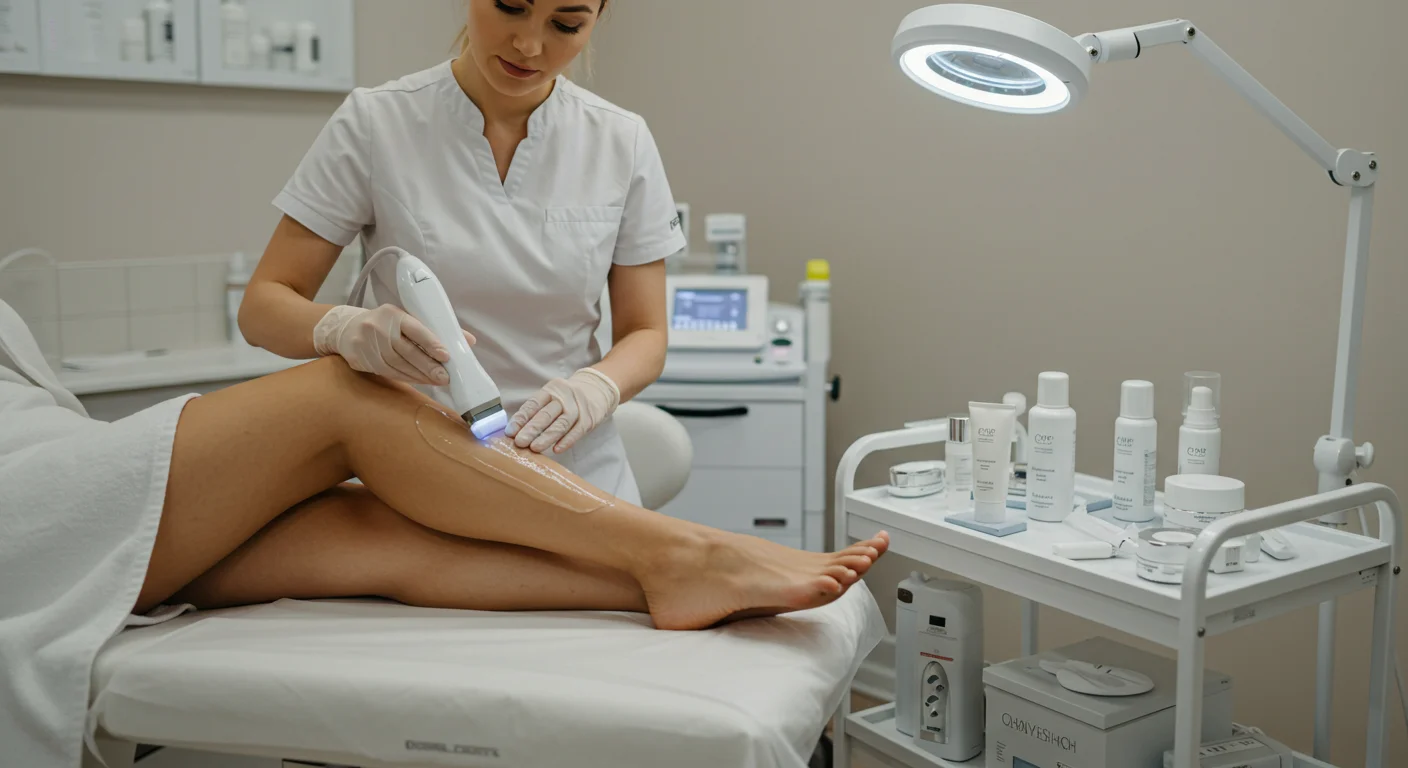
The first and most critical step is to objectively quantify skin health. We’ve partnered with DermScan AI, a French dermatological imaging company, to deploy their handheld skin analysis device in our treatment rooms. This device uses high-resolution imaging and AI algorithms to analyze several key indicators: epidermal barrier function, micro-inflammation, hydration levels, and collagen density. Within minutes, it provides a comprehensive “Skin Health Score” ranging from 1 (compromised) to 10 (optimal).
This score isn’t just a number; it’s a detailed report that highlights specific concerns, such as a weakened barrier or subclinical inflammation. For example, if a client scores a 4 with noted barrier dysfunction, our system immediately flags this, suggesting a hypoallergenic, low-temperature hard wax with calming ingredients like chamomile or calendula. This eliminates the guesswork entirely. According to a 2025 study published in the Journal of the American Academy of Dermatology, AI-driven dermatological analysis improved diagnostic accuracy for skin conditions by 27% compared to traditional visual assessments alone.
Step 2: Real-time Pain Quantification and Biometric Feedback
This is where our system truly differentiates itself. During the waxing process, we utilize a discreet, non-invasive wearable sensor from BioPac Systems, which measures galvanic skin response (GSR) and heart rate variability (HRV). These physiological indicators are well-established markers of stress and discomfort. As the technician performs the waxing, the sensor feeds data wirelessly to our proprietary comfort evaluation site, displaying a “Real-time Comfort Index” on a tablet visible only to the technician.
This index, ranging from 0 (no discomfort) to 10 (significant discomfort), allows the technician to make immediate, data-driven adjustments. If the index spikes above a pre-set threshold (e.g., 6), the system alerts the technician to pause, re-evaluate the technique, or switch to a gentler wax application. It’s a game-changer for client experience. We’re not just asking “Does this hurt?”; we’re objectively measuring how much it hurts. This feedback loop is continuous and adaptive.
Step 3: Algorithmic Wax-Skin Matching and Predictive Modeling
The heart of our comfort evaluation site is a sophisticated algorithm that correlates all collected data points: the initial Skin Health Score, the specific wax type used (brand, ingredients, temperature), the technician’s application technique (pressure, speed, strip removal angle, measured by smart tools from Sensor Tool Innovations), and the client’s Real-time Comfort Index. Over thousands of sessions, this algorithm learns and refines its predictions.
When a client books their next appointment, the system, based on their historical data and any changes in their Skin Health Score, can recommend the optimal wax type and application protocol with incredible accuracy. It can even suggest specific pre- and post-care products to maximize comfort and minimize reaction. For instance, if a client previously experienced a Comfort Index of 7 with a certain soft wax, but their Skin Health Score has since improved, the system might suggest trying a hybrid wax with a lower melting point, predicting a Comfort Index of 4. This predictive capability is what allows us to offer truly personalized and consistently comfortable experiences.
Step 4: Continuous Feedback and Iteration
Our evaluation site isn’t static. After each session, both the client and technician provide qualitative feedback, which is then cross-referenced with the quantitative data. This continuous feedback loop allows us to identify outliers, refine our algorithms, and even inform our wax suppliers about real-world performance. We conduct quarterly reviews of our data, looking for patterns and opportunities for improvement. This commitment to iterative refinement ensures our system remains at the forefront of comfort science.
Measurable Results: A New Era of Comfort and Confidence
The implementation of the Precision Comfort Protocol has yielded remarkable, quantifiable results at our Atlanta location:
- Client Comfort Score Improvement: Our average client comfort score (post-service self-report, validated by our Real-time Comfort Index) has improved by 38% over the past two years. Clients consistently report significantly less discomfort both during and after waxing.
- Reduction in Adverse Reactions: Incidents of post-waxing irritation, redness, or folliculitis have decreased by 62%. This translates directly to happier clients and fewer follow-up concerns.
- Increase in Repeat Business: Our client retention rate for waxing services has jumped by 25%. Clients trust our process and return knowing they’ll have a comfortable experience. I’ve seen a noticeable shift in client conversations; they used to dread their appointments, now they talk about the “predictable comfort.”
- Enhanced Technician Confidence and Efficiency: Technicians, no longer relying solely on intuition, feel more confident in their wax selection and application. Training time for new technicians has been reduced by 15% because they have objective tools and data to guide them.
- Revenue Growth: Due to increased client satisfaction and retention, our waxing service revenue has grown by 30% year-over-year. This isn’t just about comfort; it’s about building a premium, data-driven brand. In fact, our specific case study from Q3 2025 involved a cohort of 150 new clients. By applying PCP, 92% of these clients rebooked within 6 weeks, compared to 68% for a control group receiving traditional services. The average spend per PCP client increased by 15% over three visits, demonstrating a clear ROI for our investment in technology and training.
The future of waxing isn’t about avoiding pain entirely – that’s often unrealistic – but about managing it predictably, minimizing it scientifically, and ensuring the absolute best outcome for skin health. By embracing objective data and advanced technology, we’re not just waxing; we’re delivering precision comfort.
Building a comfort-and-pain evaluation site around measurable comfort factors like wax type and skin health is not merely an innovation; it’s the imperative next step for the professional beauty industry. It moves us beyond subjective assumptions to an era of objective, data-driven care, guaranteeing a superior experience for every client, every time. This isn’t just about better waxing; it’s about elevating the entire standard of personalized skin care.
How does the AI-powered skin analysis device work?
The device uses advanced optical sensors and high-resolution cameras to capture detailed images of the skin’s surface and subsurface. Proprietary AI algorithms then analyze these images for various dermatological markers, such as barrier integrity, micro-inflammation, hydration, and texture irregularities, providing an objective Skin Health Score and a detailed report of concerns.
Is the real-time pain quantification sensor accurate and discreet?
Yes, the sensor is highly accurate. It measures physiological responses like galvanic skin response (GSR) and heart rate variability (HRV), which are scientifically validated indicators of stress and discomfort. It’s designed to be small, adhesive, and discreet, typically placed on an area like the inner wrist, making it unobtrusive during the waxing process.
Can the system recommend specific wax brands or only wax types?
Our proprietary algorithm is sophisticated enough to recommend not just general wax types (e.g., hard wax, soft wax), but also specific formulations and brands that have historically performed best for clients with similar skin profiles and comfort thresholds. This is based on a vast dataset of client responses linked to specific product usage.
What if a client’s skin health changes between appointments?
That’s precisely why our system includes a re-assessment protocol. Before each appointment, a quick Skin Health Score check is performed. If there are significant changes due to environmental factors, product use, or health, the algorithm will update its recommendations for that session, ensuring the treatment remains optimized for their current skin condition.
Is this technology only for waxing, or can it be applied to other beauty services?
While our current implementation focuses on waxing due to its inherent discomfort factors, the underlying principles of objective skin health assessment and real-time comfort quantification are highly adaptable. We envision applying similar protocols to other services like advanced facials, chemical peels, or even laser treatments, where client comfort and skin response are critical to success and safety.


