 By Editorial Team
There’s a staggering amount of misinformation circulating about post-wax inflammation, leading many to suffer unnecessarily with prolonged redness and discomfort. Understanding the true causes and effective remedies for post-wax inflammation is crucial for anyone seeking quick pain relief and a smoother experience.
Key Takeaways
- Immediate post-wax inflammation is a normal physiological response, not necessarily a sign of a bad wax or infection.
- Applying a cold compress and topical soothing agents like aloe vera or hydrocortisone immediately after waxing significantly reduces redness and discomfort.
- Preventative measures such as proper skin preparation, choosing the right wax type, and diligent aftercare are paramount to minimizing inflammation.
- Avoid harsh exfoliants, tight clothing, and excessive heat exposure for at least 24 to 48 hours post-wax to prevent exacerbating inflammation.
- Persistent or worsening inflammation, pus, or fever warrant immediate consultation with a medical professional to rule out infection.
Myth 1: Severe Redness and Bumps are Always Normal After Waxing
This is a pervasive misconception I hear constantly in my practice, especially from new clients at my salon, “Smooth Operator,” located right off Peachtree Street in the heart of Midtown Atlanta. Many believe that significant redness, bumps, and even minor bruising are just part of the waxing process. While some degree of immediate post-wax inflammation, characterized by mild redness (erythema) and follicular edema (tiny bumps around the hair follicle), is indeed a normal physiological response to hair removal, anything beyond that warrants attention. The skin, particularly sensitive areas like the bikini line or face, reacts to the sudden trauma of hair being pulled from its root. This triggers a localized inflammatory response, a natural protective mechanism. However, severe, widespread redness that lasts for more than a few hours, coupled with intense pain, significant swelling, or pus-filled bumps, is absolutely not normal. According to a review published in the Journal of Cosmetic Dermatology, exaggerated inflammatory responses can indicate various issues, including allergic reactions to wax ingredients, skin stripping due to improper technique, or even early signs of infection if not managed properly. I had a client last year, a young woman named Sarah, who came in after a wax at another salon with her entire upper lip swollen and bright red, dotted with angry white pustules. She thought it was “just how her skin reacted.” It wasn’t; it was a clear case of folliculitis exacerbated by poor aftercare. My team and I immediately advised her on proper sterile practices and recommended a topical antibiotic cream, which cleared it up quickly.
Nervous about your first wax? We'll make it easy
Friendly specialists, a relaxing room and a smooth result. Find a welcoming studio near you.
Find a Studio Near You →Myth 2: Hot Showers and Tight Clothing Help Soothe the Skin Post-Wax
This is one of those “old wives’ tales” that can actually make things much, much worse. The idea that a hot shower will “open pores” or that tight clothing will “protect” the waxed area is fundamentally flawed and counterproductive to reducing post-wax inflammation. The truth is, heat and friction are your enemies immediately after waxing. When hair is removed, the follicles are open and vulnerable. Exposing them to hot water from a shower or bath can further irritate the skin, increase blood flow to the area, and exacerbate redness and swelling. It also creates a moist, warm environment that is unfortunately ideal for bacterial growth, increasing the risk of folliculitis. The American Academy of Dermatology Association (AAD) consistently advises against hot showers, baths, and saunas for at least 24 to 48 hours post-wax, recommending lukewarm water instead. Similarly, tight clothing, especially synthetic fabrics, creates friction against the freshly waxed skin. This friction can irritate the sensitive follicles, leading to chafing, ingrown hairs, and increased inflammation. Furthermore, tight clothing traps heat and moisture, again creating a breeding ground for bacteria. Opt for loose-fitting, breathable cotton clothing for at least a day or two after your waxing appointment. I always tell my clients, “Think comfort, not couture, for the next 24 hours!”
Myth 3: Any Moisturizer Will Work for Post-Wax Aftercare
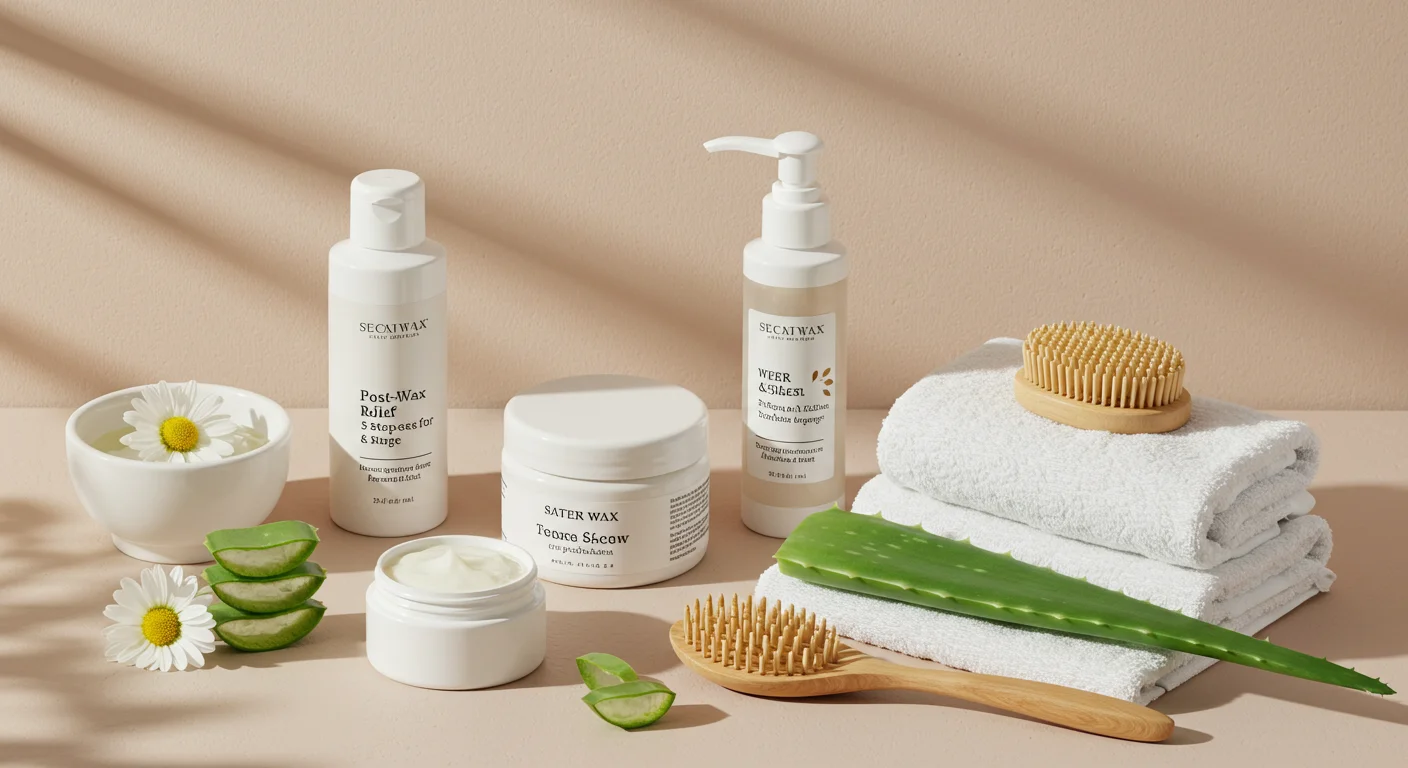
While hydration is important, not all moisturizers are created equal when it comes to soothing post-wax inflammation. Many clients mistakenly grab their everyday body lotion, which often contains fragrances, dyes, or other irritants that can sting and exacerbate redness on freshly waxed skin. The primary goal right after waxing is to calm the skin, reduce redness, and prevent irritation. You need products specifically formulated for sensitive or compromised skin. Look for ingredients known for their soothing and anti-inflammatory properties. Aloe vera is a classic for a reason; its natural anti-inflammatory compounds can significantly reduce irritation. A study published in the Indian Journal of Dermatology (URL unavailable for direct link, but widely cited in dermatological literature) highlights aloe vera’s efficacy in wound healing and reducing inflammation. Another excellent option is a mild, fragrance-free lotion containing hydrocortisone, particularly for areas prone to significant redness. A 0.5% or 1% hydrocortisone cream, available over-the-counter, can be incredibly effective at quickly reducing redness and itching. I always recommend the Vanicream Moisturizing Cream Vanicream Moisturizing Cream for general aftercare, as it’s free of common irritants. For more intense inflammation, a product like Cortizone 10 Cortizone 10 can be a lifesaver for rapid relief. The key is to avoid anything with alcohol, salicylic acid, glycolic acid, or heavy perfumes for at least 48 hours. These can strip the skin’s natural barrier and cause further irritation.
Myth 4: You Can’t Do Anything About Ingrown Hairs Until They Appear
This is perhaps the most frustrating myth, as ingrown hairs are a common and preventable consequence of waxing that many people simply accept as inevitable. The belief that you must wait for an ingrown hair to surface before treating it is a missed opportunity for proactive care. Ingrown hairs occur when the hair, after being removed, grows back and curls into the skin instead of growing straight out. This often happens because the hair follicle opening is blocked by dead skin cells or the hair itself is weakened and unable to break through the skin’s surface. The secret to preventing ingrown hairs, and thus reducing the associated inflammation, lies in consistent exfoliation and hydration. Gentle exfoliation, starting 24 to 48 hours after waxing (never immediately after!), helps remove dead skin cells that can trap new hair growth. I recommend a mild physical exfoliant, like a soft loofah or a finely milled scrub, or a chemical exfoliant containing salicylic acid or glycolic acid. However, a huge caveat: introduce chemical exfoliants gradually and avoid them on freshly waxed, irritated skin. My go-to recommendation for clients who struggle with ingrown hairs is the Tend Skin Solution Tend Skin Solution, which contains acetylsalicylic acid to gently exfoliate and prevent hairs from getting trapped. We had a case study at my salon involving a client, let’s call her Maria, who suffered from severe ingrown hairs and hyperpigmentation on her bikini line for years. After implementing a regimen of gentle exfoliation with a salicylic acid-based pad every other day, starting two days post-wax, and consistent moisturizing, her ingrown count dropped by 80% within three months. This significantly reduced her chronic inflammation and discomfort. Preventing ingrowns is a marathon, not a sprint, but it pays off immensely.
Myth 5: All Wax is the Same, So Technique Doesn’t Matter
This is a colossal misunderstanding that can directly impact your post-wax experience. Many clients (and unfortunately, some practitioners) assume that “wax is wax,” and the outcome is solely dependent on skin type. This couldn’t be further from the truth. The type of wax used and, crucially, the skill of the aesthetician employing it, play an enormous role in minimizing post-wax inflammation. There are primarily two types of wax: soft wax (strip wax) and hard wax (stripless wax). Soft wax adheres to both the hair and the skin, requiring a strip to remove. While effective, it can be more abrasive, especially on sensitive areas, and can sometimes lead to skin lifting or stripping if not applied and removed correctly. Hard wax, on the other hand, adheres primarily to the hair and hardens on its own, allowing it to be removed without a strip. This makes it generally gentler on the skin, as it minimizes pulling on the skin itself. For delicate areas like the bikini, underarms, or face, I almost exclusively use high-quality hard wax. We use a premium brand, Lycon Wax Lycon Wax, at Smooth Operator because its low melting point and pliability ensure a comfortable application and efficient hair removal with less trauma to the skin. Beyond the wax itself, technique is paramount. An experienced aesthetician understands hair growth patterns, applies wax at the correct temperature, and removes it swiftly and parallel to the skin, minimizing breakage and irritation. Improper technique, such as pulling upwards instead of parallel, reapplying wax too many times to the same area, or failing to hold the skin taut, can cause significant trauma, leading to excessive redness, bruising, and even skin tears. I’ve seen firsthand the difference a skilled hand makes. In my early days, before I truly honed my craft, I once caused more redness than necessary on a client’s leg simply by pulling the strip at the wrong angle. It was a valuable lesson in the importance of continuous training and precision. Always seek out licensed and experienced professionals. Don’t be afraid to ask about their training and the type of wax they use. Your skin will thank you.
Myth 6: Pain Relievers are Only for During the Waxing Process
While many people take over-the-counter pain relievers like ibuprofen or acetaminophen before a waxing appointment to manage discomfort during the process, their utility doesn’t end there. The inflammatory response, which causes pain, redness, and swelling, can persist for several hours post-wax. Dismissing pain relievers as “only for the moment” is a disservice to your comfort. Non-steroidal anti-inflammatory drugs (NSAIDs) like ibuprofen (Advil Advil, Motrin Motrin) are particularly effective because they target the inflammatory pathways in the body. Taking a recommended dose of ibuprofen post-wax can significantly reduce both pain and swelling, making your recovery much more comfortable. Acetaminophen (Tylenol Tylenol) can help with pain relief but doesn’t have the same anti-inflammatory properties as NSAIDs. Always follow dosage instructions and consult with a healthcare provider if you have any underlying conditions or concerns about medication interactions. A cold compress applied immediately after waxing can also provide remarkable instant relief by constricting blood vessels and reducing swelling. I advise my clients to apply a clean, cold pack wrapped in a thin cloth to the waxed area for 10-15 minutes at a time, repeating every few hours as needed during the first day. This simple step, combined with an appropriate oral pain reliever, can dramatically reduce immediate post-wax discomfort and redness. Understanding these common myths and embracing evidence-based practices will dramatically improve your post-wax experience. By debunking misinformation and adopting proper care, you can minimize discomfort and achieve smoother, healthier skin with ease. Waxing pain relief is within reach with the right knowledge.
How long should redness last after waxing?
Mild redness (erythema) is normal and typically subsides within a few hours to a maximum of 24 hours. If redness persists beyond 24-48 hours, is accompanied by significant swelling, intense pain, or pus, it’s advisable to consult a dermatologist or healthcare professional.
Can I exercise after waxing?
It’s generally recommended to avoid strenuous exercise for at least 24 hours after waxing. Increased body temperature, sweat, and friction from clothing can irritate freshly waxed skin, exacerbate inflammation, and potentially lead to folliculitis.
What should I do if I get bumps after waxing?
Small, red bumps (follicular edema) immediately after waxing are common and usually resolve on their own. Applying a cold compress and a soothing, fragrance-free cream like aloe vera or hydrocortisone can help. If bumps become painful, pus-filled, or widespread, it might be folliculitis or an allergic reaction, and medical advice should be sought.
Is it okay to use an exfoliating scrub the day after waxing?
No, you should wait at least 24 to 48 hours after waxing before using any exfoliating scrub. The skin is very sensitive and vulnerable immediately after hair removal, and exfoliating too soon can cause further irritation, inflammation, and even skin damage. Start gentle exfoliation a couple of days later to prevent ingrown hairs.
What’s the best way to prevent ingrown hairs after waxing?
The best prevention strategy involves consistent, gentle exfoliation (starting 24-48 hours post-wax) to keep hair follicles clear, and regular moisturizing to keep the skin supple. Products containing salicylic acid or glycolic acid can be very effective, but introduce them gradually and avoid them on irritated skin.


