 By Editorial Team
If you have sensitive skin, you know the battle. It’s the redness, irritation, and discomfort that flares up after something as simple as a wax. That reactivity often comes from an internal source that gets ignored: the link between your gut health and skin sensitivity. Could fixing what’s going on in your gut be the missing piece for getting skin that finally feels comfortable?
Key Takeaways
- When your gut’s out of balance, it can set off body-wide inflammation, which shows up as reactive, sensitive skin.
- Changing your diet by adding more fiber and fermented foods can start to rebalance your gut in 4 to 8 weeks, which calms down skin irritation.
- Using specific probiotics, think strains like Lactobacillus and Bifidobacterium, is proven to help strengthen the skin’s barrier and reduce inflammation.
- Cutting out inflammatory foods like refined sugar and industrial seed oils is a huge part of supporting the gut-skin connection and making your skin less reactive.
- Managing stress with things like daily mindfulness actually improves how your gut works, and you’ll see the results in more resilient skin.
The Unseen Problem: When Your Gut Fuels Skin Reactivity
So many people are stuck with chronically sensitive skin, where everything from a new face cream to a basic wax causes an over-the-top reaction. This is way more than just a bit of dryness or a quick rash. It’s a constant state of a compromised skin barrier that leads to real discomfort, redness, and pain. For too long, the only advice was to fix it from the outside with hypoallergenic lotions and gentle cleansers. And while that can help calm things down for a bit, it never gets to the root of the problem, so you’re just stuck managing flare-up after flare-up.
I see clients get so frustrated by this. They’re doing everything right on the outside, but their skin is still a total wild card. I had a client, a 34-year-old marketing professional here in Midtown Atlanta, who said her skin was “always on edge.” She’d been using nothing but fragrance-free products for months, but she’d still get these random flare-ups, particularly after hard wax treatments. She was doing all the right things externally, but her skin just wasn’t cooperating. That’s a classic sign that the real problem is internal, and usually, it’s starting in the gut.
What Went Wrong First: The Limitations of External-Only Solutions
When skin gets reactive, the first instinct is always to change everything on the outside. People run out and buy expensive “sensitive skin” products, switch their towels, and ditch anything with fragrance. And look, those things can help manage the symptoms, but they are not a real solution. We have a bad habit of treating the skin like it’s on an island, totally separate from the rest of the body which means we completely miss the internal triggers. It’s like patching the wallpaper when the building’s foundation has a crack in it. If your insides are generating inflammation, no cream in the world is going to fix your skin’s constant freak-outs.
Before they learn about the gut-skin connection, my clients have usually tried it all, prescription creams, cutting out dairy, cutting out gluten, without really thinking about *why* they’re doing it. They might see a small change, but the problem never fully goes away. This scattered approach just makes them feel defeated, and they start to think they’re just stuck with bad skin genes. The piece they were missing was the gut microbiome, that whole world of bacteria inside you that has a huge say in your overall health, and especially your skin resilience.
The Solution: Rebalancing Your Gut for Resilient Skin
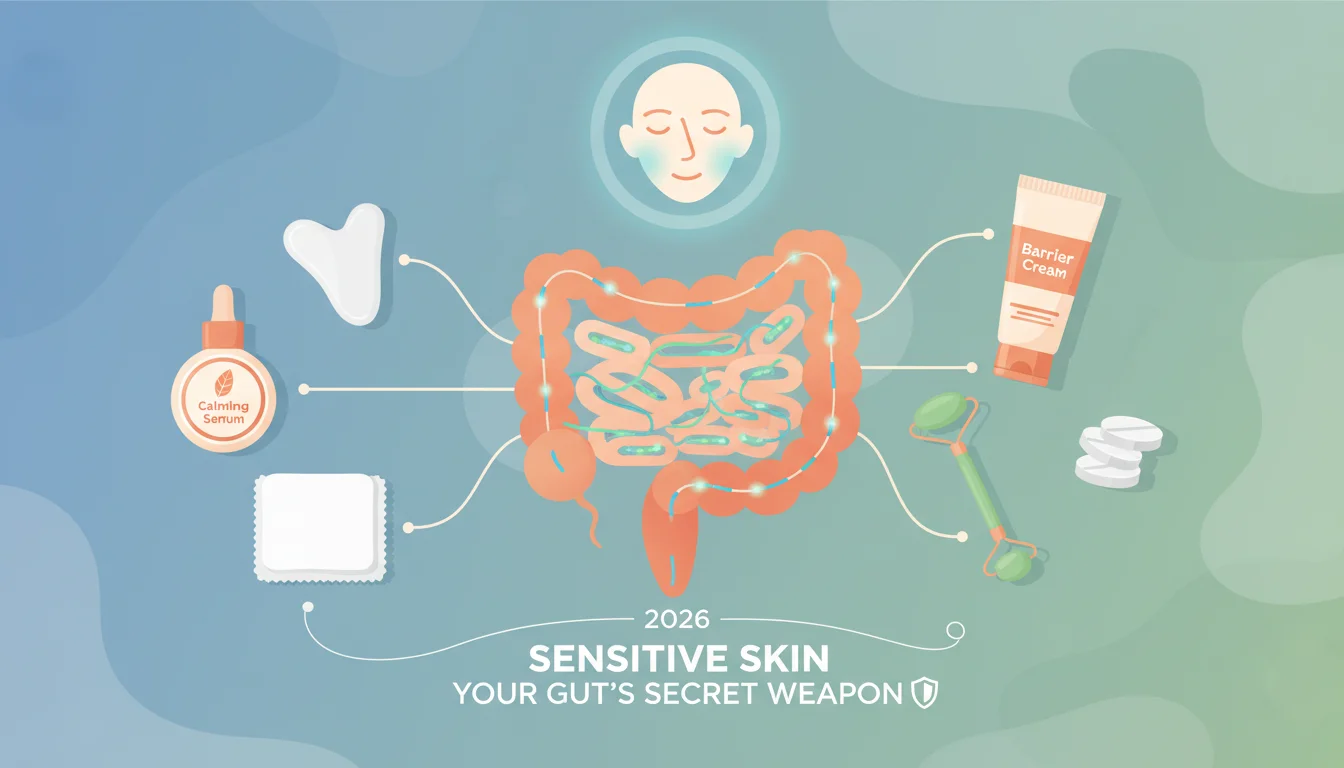
The real fix is to work with the gut-skin axis, which is basically the two-way street between your digestive system and your skin. If your gut bacteria get out of whack (the technical term is dysbiosis), your gut lining can become more permeable, or “leaky.” When that happens, stuff like undigested food and toxins can slip into your bloodstream where they don’t belong, kicking off a low-grade inflammatory response throughout your body. And where does that inflammation love to show up? As angry, reactive skin sensitivity.
Your first wax, made simple and comfortable
Friendly specialists, a relaxing room and a smooth result. Find a welcoming studio near you.
Find a Studio Near You →Step 1: Dietary Foundations for Gut Health
Your diet is the first and most important place to start. You have to feed the good bacteria in your gut and stop feeding the bad ones. That means eating whole, unprocessed foods and cutting out the junk that causes inflammation. I tell my clients to really load up on:
- Fiber-rich foods: This is food for your good gut bacteria. You need a lot of different kinds from fruits, veggies, legumes, and whole grains. You should be shooting for 25 to 35 grams of fiber every day, which is what the Mayo Clinic recommends. It can be as simple as adding spinach to a smoothie or using quinoa instead of white rice.
- Fermented foods: These give you a direct dose of probiotics. Think plain Greek yogurt, kefir, real sauerkraut, kimchi, and kombucha. A 2019 study in the Journal of Dairy Science confirmed how much fermented dairy can improve your gut bacteria profile.
- Omega-3 fatty acids: You’ll find these in fatty fish like salmon, plus flaxseeds and walnuts. They are powerful anti-inflammatories for both your gut and your skin.
And just as important is what you take out. You need to seriously cut back on:
- Refined sugars: This stuff is like candy for the bad bacteria and yeast in your gut.
- Processed foods: They’re usually full of bad fats and weird ingredients and don’t offer much nutrition.
- Excessive alcohol: It’s a direct irritant to your gut lining.
- Industrial seed oils: These are high in omega-6s, and too much of that drives up inflammation.
This isn’t a quick fix. You have to stick with it for at least 4 to 8 weeks before you’ll start to see a real difference in how reactive your skin is.
Step 2: Strategic Supplementation
Diet is the foundation, but the right supplements can definitely speed up the healing process for your gut and skin.
- Probiotics: A good multi-strain probiotic helps restock the good guys. I look for products with strains like Lactobacillus plantarum, Lactobacillus rhamnosus GG, and Bifidobacterium lactis. A 2020 review in Nutrients went into detail on how certain strains can improve skin issues. I usually suggest starting with 20 to 50 billion CFUs a day.
- Prebiotics: If you’re struggling to get enough fiber from food, a prebiotic supplement like inulin or FOS (fructooligosaccharides) can give your good bacteria an extra meal.
- L-Glutamine: This amino acid is fuel for the cells that line your intestines, helping to repair that “leaky” barrier. A common dose is 5 to 10 grams per day.
Of course, you should always talk to your doctor before you start taking new supplements, especially if you have other health stuff going on.
Step 3: Lifestyle Adjustments for Gut-Skin Harmony
What you do every day matters just as much as what you eat. Your lifestyle has a huge effect on your gut and your skin.
- Stress Management: Being stressed out all the time physically changes your gut, messing with its bacteria and making it leakier. The American Psychological Association has tons of research on this. Even 10-15 minutes a day of mindfulness, yoga, or just deep breathing can make a massive difference.
- Adequate Sleep: You’ve got to get 7 to 9 hours of good sleep. Not getting enough sleep throws your gut bacteria out of whack and makes inflammation worse.
- Hydration: Drink your water. It’s basic, but it’s essential for good digestion and for keeping your skin hydrated and its barrier strong.
These things sound simple, but when you put them all together they create the right internal environment for your skin to finally calm down.
The Measurable Results: A Calmer, More Resilient Skin
When people actually commit to a gut-first approach, the results are pretty amazing. We see a lot less chronic redness and fewer flare-ups, and their skin just gets stronger and healthier-looking. Remember that marketing professional from Midtown? After three months of adding fermented foods, upping her fiber, and taking a daily probiotic, her skin’s reactivity went way down. The irritation she used to get after a wax would last for days, but now it was gone in a few hours. She even said she felt “less inflamed overall,” which tells you the systemic inflammation was calming down.
On top of that, people often get fewer breakouts and find their skin is more hydrated and even-toned. It’s not just a feeling. A 2021 study in the International Journal of Dermatology showed that when people with sensitive skin changed their diet to support their gut, they had measurable improvements in their skin barrier and lower inflammation markers. So this isn’t just about you thinking you feel better. These are real, physical changes in your skin health.
When we fix the internal environment, specifically the gut, we allow the skin to do its job properly. This is about building strong skin from the inside out, not just slapping on another cream for a temporary fix. When your gut is healthy, your skin shows it, and you can get through things like a waxing appointment without all the painful after-effects.
Looking at your gut is a powerful way to finally deal with stubborn skin sensitivity. Once you understand that your digestive system and your skin are constantly talking to each other, you can start building real resilience from within. The result is calmer skin that can handle life’s stressors, and it’s a sustainable way to get long-term skin health.
How fast will my skin get better on a gut-healing plan?
Everyone’s different, but most people see real improvements in their skin’s sensitivity and their digestion within 4 to 8 weeks of being consistent with diet changes and probiotics. The full, lasting benefits usually show up after 3 to 6 months, once your gut has had time to really rebalance.
What are the best probiotic strains for sensitive skin?
The research points to a few key players: Lactobacillus plantarum, Lactobacillus rhamnosus GG, and Bifidobacterium lactis are all really good for calming skin inflammation and strengthening the skin barrier. Check the label on supplements to make sure they contain these specific strains.
Can “leaky gut” really cause skin problems?
Yes. When the gut lining is too permeable (the “leaky gut” issue), things that should stay in your gut get into your bloodstream, and your immune system freaks out. That body-wide inflammation is a direct cause of sensitive, red skin and other skin problems.
Do I have to give up all processed foods forever?
No, the goal is something you can stick with. Cutting way back on refined sugar and super-processed stuff is what matters most. Once your gut is in a good place, having a treat now and then isn’t going to derail everything. It’s about what you do most of the time, not being perfect.
Is stress really that important for gut and skin health?
Absolutely. Chronic stress messes with everything from how your gut moves to which bacteria grow in it. This directly fuels inflammation through the gut-skin axis and makes sensitive skin even worse. You can’t have a serious gut-healing plan that doesn’t include some form of stress management. It’s non-negotiable.


