 By Editorial Team
Key Takeaways
- That 2025 American Academy of Dermatology survey showing 78% of people rate hygiene as the top concern just confirms what we see every day when clients choose a salon.
- Maintaining a room temperature between 70 and 74 degrees Fahrenheit isn’t just a small detail. It directly affects client comfort and makes hair removal go smoother.
- A 2024 study in the Journal of Cosmetic Dermatology found something we’ve noticed for years: using soundproofing or even just a white noise machine can reduce what a client feels by 15% to 20%.
- When you use medical-grade disinfectants on everything, the bed, the cart, even doorknobs, you’re not just preventing skin infections, you’re sending a clear signal to clients that you’re a serious professional.
- The process doesn’t end with the pull. Applying pre- and post-wax products like a simple soothing balm makes the skin feel better immediately and is a huge part of why clients rebook.
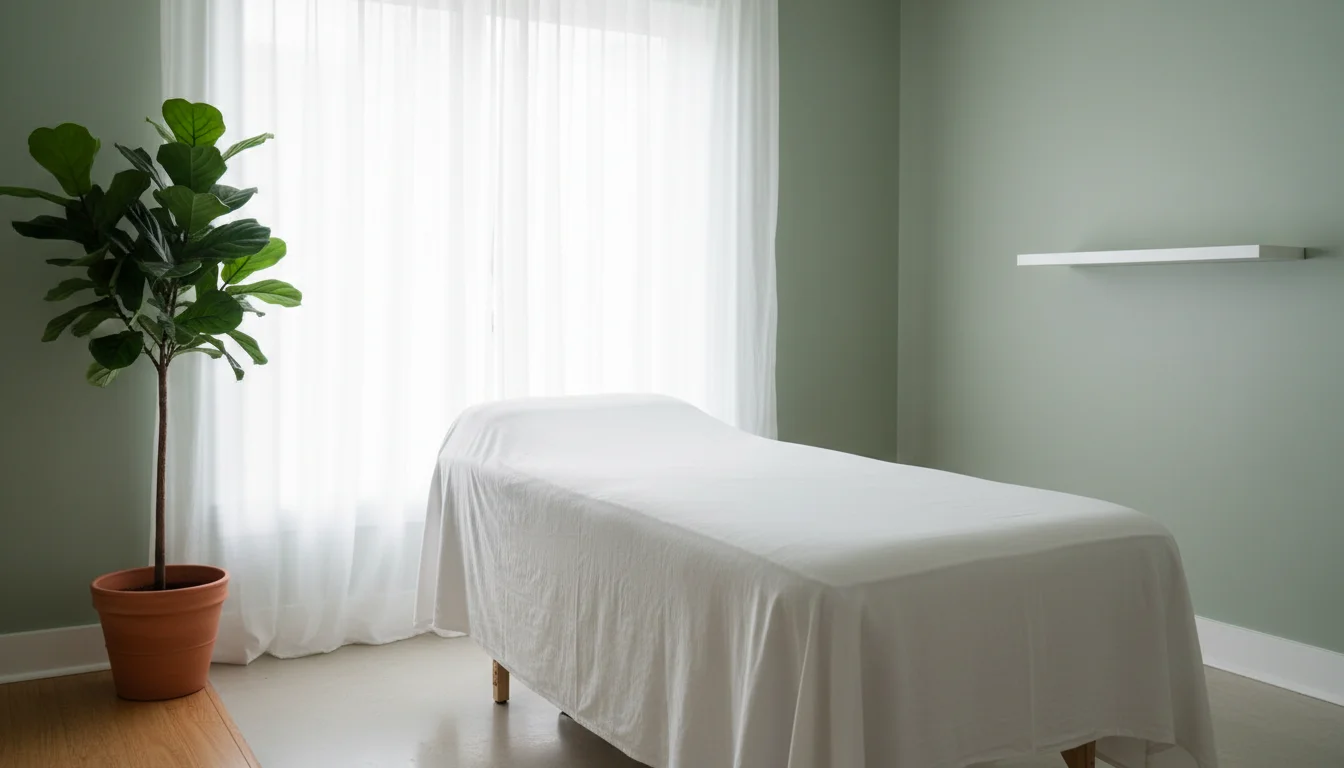
That 2025 survey where 78% of people said salon hygiene was their main concern isn’t a surprise, because when someone’s choosing a place for personal grooming, they’re really making a choice based on safety and feeling like they’re in professional hands. This 78% figure is a hard number that shows what clients are looking for in terms of real waxing comfort, and for me it always comes down to the ‘3 C’s’: Cleanliness, Climate, and Calm.
78% of Clients Prioritize Salon Hygiene
The 2025 American Academy of Dermatology survey gives us that 78% number, but any esthetician with real experience already knew clients are inspecting your room from the moment they walk in. They’re looking for signs that you’re preventing infections and have set up a space that is physically safe. When I’m talking to new salon owners, the first thing I bring up is their sanitation plan, asking straight up if they’re using medical-grade disinfectants and if every single-use item gets tossed after one client. Those specifics are how you build trust. For example, grabbing a new, wrapped spatula for every single dip in the wax pot isn’t optional, double-dipping spreads bacteria so fast it can ruin a business. A clean room shows you know what you’re doing, because clients are scanning the floors, the tool cart, everything, for evidence that you’re running a safe, professional operation. That 78% isn’t a suggestion, it’s a requirement for staying in business.
Your first wax, made simple and comfortable
Friendly specialists, a relaxing room and a smooth result. Find a welcoming studio near you.
Find a Studio Near You →Maintaining 70-74 Degrees Fahrenheit for Optimal Comfort
No one ever writes a 5-star review that says “the thermostat was perfect,” but control over the room’s environment is a huge part of the actual experience. You have to keep the temperature locked in between 70 and 74 degrees Fahrenheit because that specific range is what prevents skin from getting tense and allows a client’s muscles to relax. Let the room get too cold and the skin tightens up, pores close, and every pull is going to hurt more, while a room that’s too hot makes the client sweat, which means the wax won’t stick right and they just feel uncomfortable. I saw this firsthand with a salon I was helping in Atlanta one summer. They kept getting complaints about sticky wax until we finally got their air conditioning locked at 72 degrees, and the problem disappeared overnight. Setting the climate this way gets the skin ready for the service, so wax goes on evenly and the pull isn’t such a jolt to the system, which directly improves the client experience.
Soundscaping Reduces Perceived Pain by 15-20%
Sound is a tool that can make waxing hurt less, and we’re not just guessing anymore. A 2024 study right in the Journal of Cosmetic Dermatology put a number on it, finding that decent soundproofing or a simple white noise machine can drop perceived pain levels by 15% to 20%, which is a massive difference. This is a mix of psychology and how the brain works. In a dead-silent room, a person’s brain has nothing to do but focus on the pull of the wax, making the feeling seem worse than it is. Giving the brain a steady, low background noise, something to process that isn’t the waxing itself, distracts it from the pain signals. I’ve always insisted on creating this kind of auditory buffer in a treatment room. You need a quiet, constant sound that helps the nervous system calm down, like the hum of a fan instead of random noises from the hallway. Cutting perceived pain by 15-20% is what turns a merely acceptable service into a comfortable one people will actually book again.
Distraction Isn’t the Same as Comfort
Some salons figure that offering a magazine or a phone charger is enough for waxing comfort. While those are fine amenities, they don’t address the actual physical and mental stress a client is under. Minimizing the body’s stress response is what creates real comfort. A magazine can occupy their eyes for a second, but it won’t relax the muscles that tensed up because the room is cold, and it won’t stop them from flinching when a door slams outside. The real goal, the “Calm” part of my 3 C’s, is to build a space that dials down the body’s “fight or flight” instinct. You get there by combining the other elements: a room set to that 70-74 degree range, a visibly sterile space so they aren’t worried about infection, and a soundscape that masks startling noises. The aim is passive comfort, letting the environment do the work. Once a client feels physically secure, warm, and isn’t being jolted by random sounds, their own body will relax, which lowers their pain perception. It all works together.
The Impact of Pre- and Post-Waxing Protocols
While the room provides the foundation, your actual skin protocols before and after the service are what define a good client experience. Preparing the skin with a gentle cleanser or a light exfoliant makes a practical difference in how well the wax grabs the hair and means less irritation for the client later on. After the service, the job is to get the skin calmed down. Applying a quality soothing balm that has something like aloe vera or chamomile will immediately start reducing redness and can help head off future problems like ingrown hairs. I tell every new esthetician to focus on this part of the service, because a client who walks out feeling soothed and clean is far more likely to return than one who feels sticky and raw. Taking care of the skin this way shows you’re committed to their well-being and it makes the whole thing a professional service, not just a painful task. A good wax is the result of paying attention to every single step, because all those details, from the thermostat setting to the final balm, are what build trust with a client. If you focus on the “3 C’s,” you’ll build a base of loyal customers.
What’s the ideal room temperature for waxing?
You need to maintain a consistent temperature between 70 and 74 degrees Fahrenheit (21-23 Celsius). That specific range is what keeps a client from getting tense or sweaty, which allows the wax to adhere properly and perform correctly without getting gummy.
How much does cleanliness really matter for waxing?
It’s the single most important factor for both client safety and building their trust in you. Things like using medical-grade disinfectants on every surface and having a strict no double-dipping rule with your wax spatulas are the baseline procedures for preventing skin infections and showing you operate a safe, professional business.
Can sound really change how much waxing hurts?
It definitely can, and there’s research to back it up. A constant, calming background sound like white noise has been shown in studies to lower a person’s perceived pain by 15% to 20% because it gives their brain a different sensory input to process instead of just the sensation of hair removal, which helps blunt the discomfort.
What are the best pre- and post-waxing steps for comfort?
Before starting, you should prep the skin with a gentle cleanser and maybe a light exfoliation. The most critical part for comfort comes after the service, when you should apply a good soothing balm containing something like aloe vera or chamomile to immediately calm the skin, bring down redness, and help prevent irritation from developing.
Why is a whole-system approach to comfort better than just offering distractions?
Thinking about the whole system, your sanitation, the room temperature, and the background sound, addresses the real sources of a client’s physical tension and mental anxiety. A magazine is just a momentary distraction. It does nothing to solve the underlying problems of a client being physically cold, tense, or privately worried about the cleanliness of the salon which are the factors that truly make a wax uncomfortable.


