 By Editorial Team
Effective waxer communication is the cornerstone of a comfortable and successful hair removal experience. Too often, clients suffer in silence, enduring discomfort or leaving unsatisfied simply because they felt hesitant to speak up. Building a strong, open comfort dialogue with your esthetician isn’t just about politeness; it’s about ensuring your safety, managing pain, and achieving the best possible results. But how do you initiate and maintain that crucial conversation?
Key Takeaways
- Before your appointment, prepare a concise list of any allergies, sensitivities, or medications that could impact your skin’s reaction to waxing.
- During the consultation, explicitly state your comfort levels, desired hair removal patterns, and any immediate concerns regarding pain or skin reactions.
- Actively provide feedback during the waxing process, using clear, calm language to communicate discomfort or request adjustments.
- After your session, discuss aftercare instructions thoroughly and report any unusual skin reactions within 24 hours to your esthetician.
- Establish a consistent communication style with your preferred esthetician to build trust and ensure personalized, satisfactory results over time.
I’ve been a licensed esthetician for over a decade, and I can tell you firsthand that the most successful waxing sessions, the ones where clients leave truly happy and comfortable, are always those where there’s clear, consistent communication. It’s not about being demanding; it’s about being informed and assertive. Think of your esthetician as your partner in this process. They want you to be comfortable, but they can’t read your mind. My goal here is to empower you with the practical steps to foster that essential dialogue.
1. Prepare Your Pre-Appointment Briefing
Before you even step foot in the salon, a little preparation goes a long way. This isn’t just for first-timers; even seasoned waxers benefit from a quick mental run-through. I always advise clients to think about their skin history and any recent changes. For instance, have you started a new medication? Are you using any topical retinoids or acids? These details are critical. According to the American Academy of Dermatology Association, certain medications and skin conditions can make waxing risky or increase sensitivity. Knowing this upfront allows your esthetician to adjust their technique or recommend alternative hair removal methods.
Pro Tip: Keep a running list on your phone’s notes app. Just a few bullet points: “Accutane use 6 months ago,” “currently using salicylic acid on chest,” “history of ingrown hairs under arms.” This makes sharing information quick and ensures you don’t forget anything important. It also shows your esthetician you’re serious about your skin health, which builds trust immediately.
Common Mistake: Assuming your esthetician “should know” based on your appearance. Skin reactions and sensitivities aren’t always visible. It’s your responsibility to disclose relevant medical or product use history.
2. Master the Initial Consultation
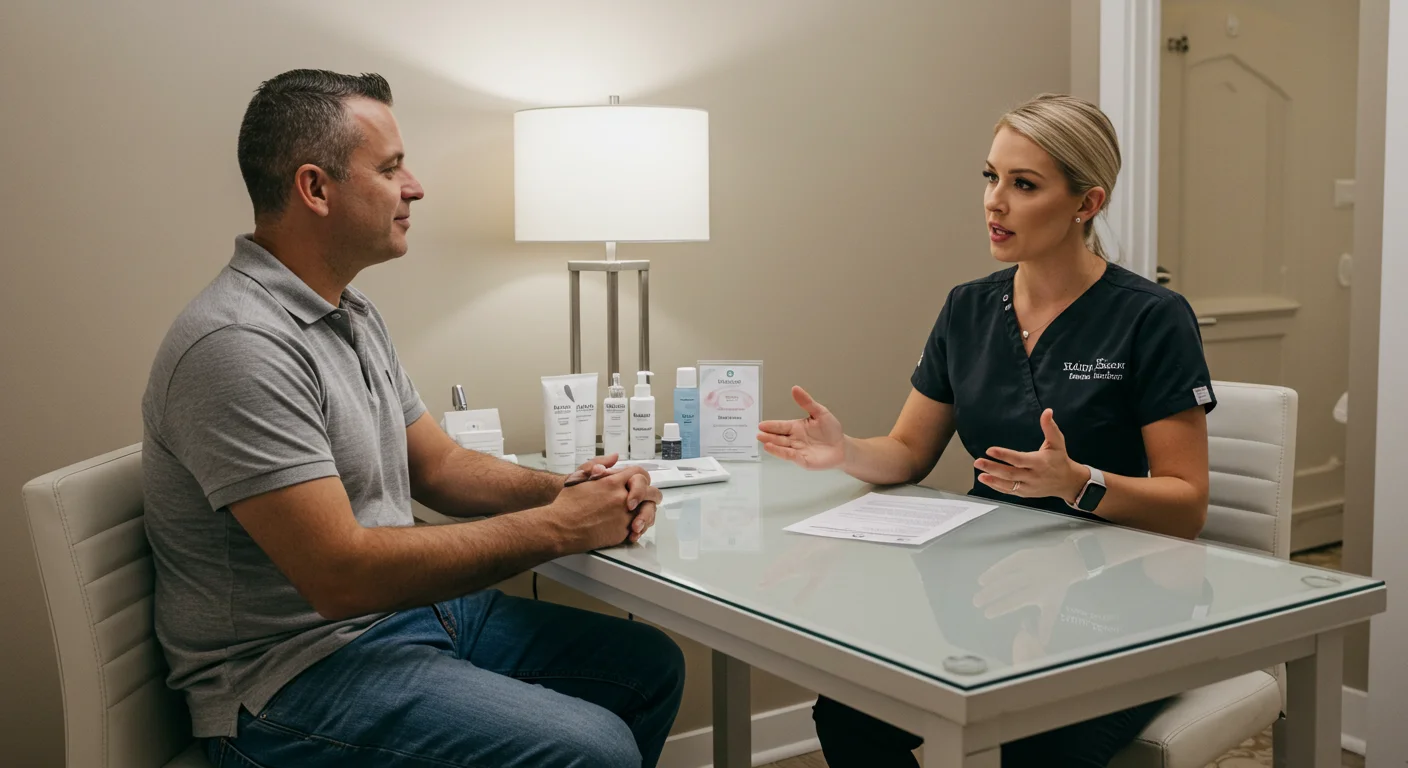
The consultation is your prime opportunity to set the stage. When you’re in the treatment room, your esthetician will likely ask a series of questions. Don’t just give one-word answers. This is your moment to explain your expectations and voice any concerns. I always start by asking, “What brings you in today, and what are your goals for this session?” This open-ended question invites a detailed response.
Here’s what you should cover:
- Your desired outcome: Be specific. “I want a full Brazilian, but I’d like to leave a small strip.” Or, “I’m looking for a clean brow shape, but I want to keep them on the thicker side.”
- Pain tolerance: Be honest. “I have a very low pain tolerance, so please go slowly.” Or, “I’ve been waxed before; I can handle it, but warn me before sensitive spots.”
- Previous experiences: “Last time I got waxed, I broke out terribly. Is there anything we can do to prevent that?” This gives us valuable insight.
- Any areas of particular sensitivity: For example, “My inner thighs are always super sensitive.”
One time, I had a client, let’s call her Sarah, who was getting her underarms waxed. She was incredibly quiet during the consultation. I asked all my usual questions, and she just nodded. During the waxing, I noticed she was flinching quite a bit. I stopped and asked, “Are you okay? Is this too much?” She then admitted, “Oh, I’m actually on a new antibiotic that makes my skin really sensitive, and I forgot to mention it.” We immediately switched to a gentler technique and used a specific type of hard wax designed for sensitive areas, which significantly improved her comfort. That experience taught me, and hopefully her, the absolute necessity of speaking up.
3. Provide Real-Time Feedback During the Process
This is where the rubber meets the road. Waxing can be uncomfortable, but it shouldn’t be unbearable. If you’re experiencing pain beyond what’s tolerable, or if something just doesn’t feel right, you absolutely must speak up. Your esthetician is focused on the task at hand; they might not always pick up on subtle cues. A study published in the Journal of Clinical Nursing in 2022 highlighted the importance of patient communication in managing procedural pain, and waxing is no exception.
How to communicate effectively:
Your first wax, made simple and comfortable
Friendly specialists, a relaxing room and a smooth result. Find a welcoming studio near you.
Find a Studio Near You →- Use clear, concise language: “That stings a lot,” or “Can you hold the skin tighter there?”
- Don’t apologize for feeling pain: It’s a natural reaction.
- Suggest adjustments: “Maybe a smaller strip next time?” or “Could we take a quick break?”
- Give positive feedback too: “That feels much better,” or “You’re doing great!” This helps build rapport.
I always tell my clients, “Think of me as your co-pilot. You’re in the driver’s seat of your comfort.” If I’m working on a particularly sensitive area, like the upper lip or bikini line, I’ll often pause after the first strip and ask directly, “How was that? Scale of 1 to 10?” This opens the door for them to give honest feedback without feeling like they’re interrupting. If the response is high, I can then adjust my strategy, perhaps by applying less wax at once or using a different angle.
Pro Tip: Don’t wait until the pain is excruciating. As soon as you feel discomfort escalating, say something. It’s much easier for us to adjust early on than to try and recover from an already painful situation.
Common Mistake: Gritting your teeth and enduring it. This doesn’t help anyone. It creates a negative experience for you and prevents your esthetician from learning how to better serve you.
4. Engage in the Post-Wax Discussion
The conversation doesn’t end when the last strip is pulled. The post-wax discussion is vital for proper aftercare and future appointments. This is when your esthetician will typically go over instructions for minimizing redness, preventing ingrown hairs, and extending the smoothness of your skin. This is also your chance to ask any lingering questions.
Key points to cover:
- Aftercare product recommendations: “What specific type of moisturizer should I use?” or “Do you recommend an ingrown hair serum for my skin type?” We often have preferred brands or ingredients we know work well. For example, I frequently recommend a gentle, fragrance-free lotion containing soothing ingredients like aloe vera for post-wax care or chamomile, especially for clients prone to redness.
- Expected reactions: “Is this much redness normal?” or “My skin feels a bit tingly, is that okay?”
- Next appointment timing: “When should I book my next appointment for optimal results?” The general recommendation is typically every 3 to 4 weeks, but this can vary based on individual hair growth cycles.
- Any concerns for future sessions: “Next time, could we try a different angle on my eyebrows?”
I had a client who consistently got bumps after her bikini waxes, despite following all the standard aftercare. During one post-wax chat, she mentioned she loved taking very hot baths immediately after her sessions. I explained that prolonged exposure to hot water could irritate newly waxed follicles and increase inflammation. Once she adjusted her post-wax routine to lukewarm showers for the first 24 hours, her issue completely cleared up. It was a simple fix, but it only happened because she communicated her habits.
5. Cultivate a Long-Term Relationship
Finding an esthetician you trust and feel comfortable communicating with is like finding a good doctor or stylist. Once you do, stick with them! Consistency builds familiarity. When you see the same person repeatedly, they learn your skin, your pain points, and your preferences. They’ll remember that you prefer less conversation during certain parts of the service or that you’re particularly sensitive on your knees.
This long-term relationship fosters a deeper level of client esthetician trust. They’ll notice subtle changes in your skin over time and can proactively address potential issues. For instance, if I see a client’s skin is unusually dry one month, I might recommend a more hydrating aftercare routine or suggest a different wax application technique for that session. This personalized care is a direct result of consistent communication and a developing professional bond.
Case Study: Emily’s Journey to Comfort
Emily, a 32-year-old client, used to dread her full leg waxes. She would often cancel or show up visibly anxious. Her primary issue was extreme discomfort on her shins and ankles, which often led to significant post-wax redness and irritation. For months, she’d just quietly endure it. When she started coming to me, I implemented a structured communication approach.
Initial Consultation: Emily expressed her anxiety and specific pain points. I noted her sensitivity on the shins.
During Session 1: I used a slower technique on her shins, applied a pre-wax oil to create a better barrier, and checked in frequently. I also used a specific type of hard wax technique known for its gentleness. Emily provided immediate feedback, confirming the shins were still painful but less so. I asked about her at-home exfoliation routine, which she admitted was inconsistent.
Aftercare Discussion: I recommended a gentle physical exfoliant to be used 2-3 times a week, starting 48 hours post-wax, and a specific soothing balm for immediate post-wax application. I also suggested she take an over-the-counter pain reliever 30 minutes before her next appointment.
Session 2 (4 weeks later): Emily reported less pain on her shins. We continued with the same wax and technique. She also mentioned she was using a new body wash with salicylic acid, which I advised her to pause 3 days before her next wax to avoid over-exfoliation and sensitivity.
Outcome: Over three months, by consistently communicating and making small adjustments based on her feedback and my observations, Emily’s discomfort decreased by approximately 60%. Her post-wax redness was significantly reduced, and she no longer cancelled appointments. She now confidently books her waxes, knowing her comfort is prioritized.
My editorial aside here: I hear so many stories of clients who just “put up with it.” That’s simply not necessary. This isn’t dentistry from the 1950s. Modern waxing techniques and products, combined with good communication, mean you really can have a much more comfortable experience. Don’t settle for less.
Open communication with your esthetician transforms a potentially uncomfortable chore into a personalized, positive experience. By preparing, speaking up, and actively participating in the dialogue, you ensure your needs are met, your skin is protected, and you achieve the smooth results you desire every time.
What should I tell my waxer if I’m a first-timer?
If you’re a first-timer, tell your waxer immediately. Be open about any anxieties, your pain tolerance, and any specific concerns you have about the process or aftercare. This allows your esthetician to explain each step, go slower, and address your questions directly, making your initial experience as comfortable as possible.
How do I tell my waxer to stop or slow down without being rude?
Simply say, “Could we take a quick break?” or “That’s quite sensitive, could we go a bit slower or try a smaller strip?” Estheticians are professionals and understand that waxing can be uncomfortable. Clear, calm communication is always preferred over silence and discomfort. Your comfort is their priority.
Should I mention if I’m on medication, even if it’s not skin-related?
Absolutely. Always disclose all medications, both topical and oral, even those you might not think are skin-related. Certain medications, like antibiotics, blood thinners, or even some antidepressants, can increase skin sensitivity or affect healing, making waxing potentially risky. Your esthetician needs this information to assess your skin’s suitability for waxing and adjust techniques if necessary.
What specific aftercare questions should I ask my waxer?
Ask about specific product recommendations for your skin type, how long to avoid hot showers or exercise, when you can exfoliate, and what signs of irritation or infection to look out for. Also, clarify when to book your next appointment for optimal hair growth cycles.
Is it okay to ask my waxer to adjust the temperature of the wax?
Yes, it’s perfectly fine to ask. While estheticians are trained to maintain wax at a safe and effective temperature, individual sensitivity can vary. If the wax feels too hot or too cool, calmly say, “Could you check the temperature of the wax? It feels a bit warm for me,” or “The wax feels a little cool, is that normal?” They can then make the necessary adjustments.


