 By Robert Jones
Let’s be blunt: The Skin Cancer Foundation says 90% of non-melanoma skin cancers are tied to sun exposure (Source). That number should get your attention. With all the recent FDA talk about sunscreen ingredients and UV filters, protecting your skin is more complicated than it used to be. So, what do these changes actually mean for you, especially when you’re thinking about pre-wax safety and keeping your skin comfortable?
Key Takeaways
- Right now, the FDA only gives its highest safety rating, GRASE (Generally Recognized as Safe and Effective), to two ingredients: zinc oxide and titanium dioxide.
- A bunch of common chemical filters (like oxybenzone) are in a gray area, with the FDA asking for more safety data before it gives them the same green light.
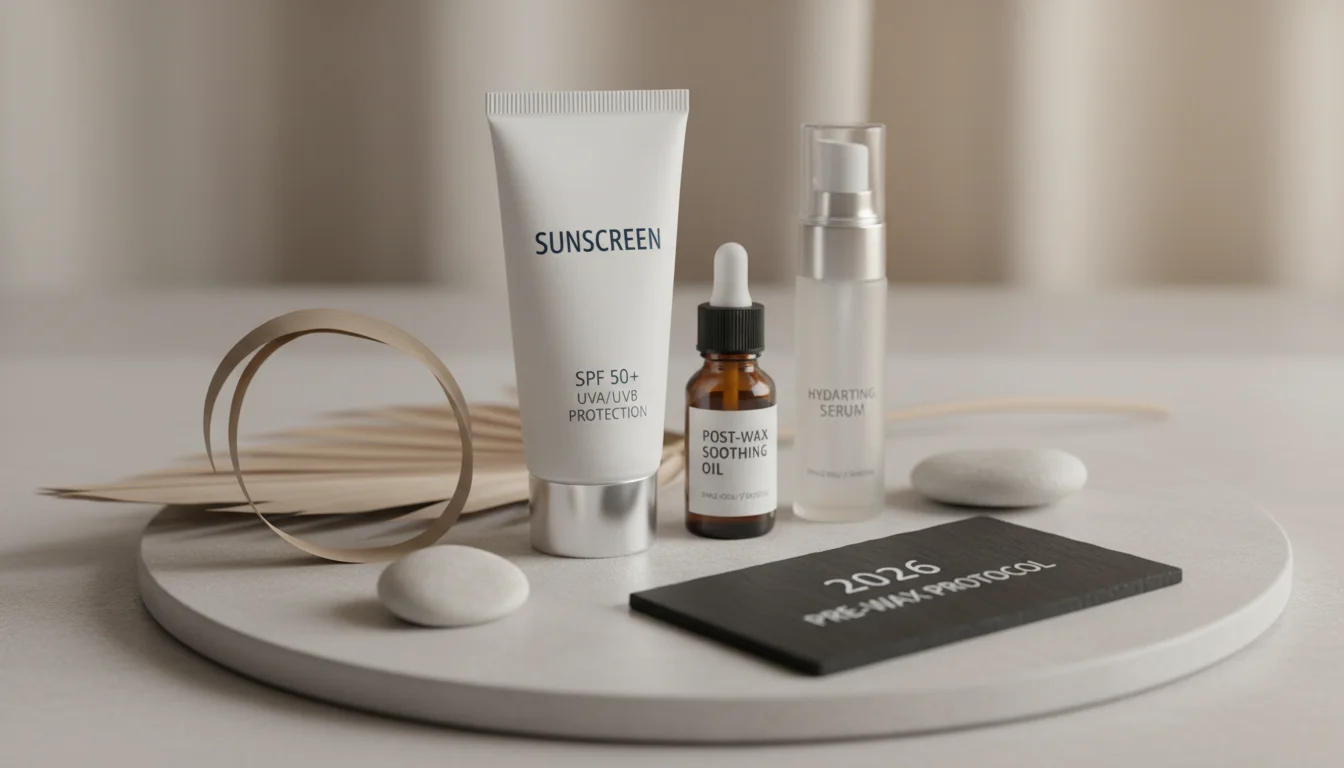
- For pre-wax safety, stick to physical sunscreens with non-nano zinc oxide or titanium dioxide at SPF 30+. It’s the safest bet for skin that’s about to be stressed.
- Put your sunscreen on 15-30 minutes before you go outside. It needs time to set up and form a protective film.
- You have to reapply every two hours. Period. If you’re swimming or sweating, do it even more often. The SPF number doesn’t change that rule.
Only Two UV Filters Are Currently GRASE
The FDA put out a proposed rule back in 2019 that’s still making waves. It said only two sunscreen ingredients are GRASE (Generally Recognized as Safe and Effective): zinc oxide and titanium dioxide (Source). That just means these two mineral filters have enough solid proof behind them that they’re safe and they work, no more questions asked. This is a big deal if you have sensitive skin or you’re worried about what your body is absorbing. For pre-wax safety, keeping irritation to a minimum is the whole game. Mineral sunscreens are great for this because they create a physical shield on top of your skin, rather than soaking in like chemical filters do, which is often what causes reactions.
Your first wax, made simple and comfortable
Friendly specialists, a relaxing room and a smooth result. Find a welcoming studio near you.
Find a Studio Near You →Eight Common Chemical Filters Require More Data
On the other side of the coin, the FDA says there’s not enough data to call eight other very common chemical filters GRASE. You’ll recognize the names: avobenzone, oxybenzone, octinoxate, octisalate, octocrylene, homosalate, ensulizole, and meradimate. The agency is asking for more safety info on how much of these get into your bloodstream and their potential long-term effects (like on reproduction or cancer risk). While they haven’t been proven unsafe, the complete long-term studies just aren’t there yet. If you’re focused on comfort protection, especially right before a waxing appointment when your skin is at its most vulnerable, choosing products with a rock-solid safety record is just common sense. I tell all my clients to play it safe and avoid ingredients with question marks over their heads when their skin is about to be put through a wax.
Daily Sunscreen Use Reduces Melanoma Risk by 50%
A major decade-long study from 2011 in the Journal of Clinical Oncology tracked over 1,600 people and came to a stunning conclusion: using sunscreen every single day cut their melanoma risk in half (Source). This is about so much more than avoiding a pink nose after a day outside. It’s about slashing your risk of the deadliest type of skin cancer. Consistency is everything. For my waxing clients, especially those getting facial or large body areas done, this means sunscreen has to be a non-negotiable part of your daily skin health regimen, not an afterthought you grab for a beach day. It’s simple: protected skin just heals better and is less likely to have a bad reaction to treatments like waxing.
SPF 30 Blocks 97% of UVB Rays, SPF 50 Blocks 98%
People get really hung up on the difference between SPF 30 and SPF 50, but it often creates a false sense of security. The American Academy of Dermatology (AAD) breaks it down: an SPF 30 sunscreen blocks about 97% of UVB rays, and an SPF 50 blocks about 98% (Source). That’s a tiny 1% jump. So what’s the real story? Applying an SPF 30 (or higher) product correctly and consistently is way more important than obsessing over a super-high number. Most people don’t use nearly enough sunscreen, which means the SPF they’re actually getting is way lower than what’s on the bottle. It’s a huge mistake. When you’re prepping for a wax, an SPF 30 mineral sunscreen that you apply generously gives you fantastic protection, and you’re less likely to get the irritation some of those high-SPF chemical formulas can cause.
The Conventional Wisdom on Chemical Sunscreens Needs Re-evaluation
For a long time, the party line in the beauty world, and from some dermatologists, was that chemical sunscreens were better because they felt nicer and blended in well. The old thinking was that as long as it was broad-spectrum and had a decent SPF, the specific ingredients didn’t really matter. I completely disagree with that, especially with the FDA’s current review. The fact that the FDA is formally asking for more safety data on systemic absorption for eight extremely common chemical filters is a giant red flag. This isn’t some small regulatory tweak. It’s a demand for better testing on ingredients that people slather on their bodies every day. In my professional opinion, it’s irresponsible to keep recommending these products without being upfront about the fact that we don’t have all the safety information. For anyone with sensitive skin or prepping for a wax, sticking to mineral-based sunscreens containing zinc oxide and titanium dioxide is the smartest way to get reliable sun protection and comfort protection. You should pick ingredients with a proven safety record, not just the ones that feel convenient.
Keeping up with sunscreen rules means you have to be your own advocate for your skin health. Knowing where the FDA stands and choosing ingredients with a long, proven safety record lets you make smart choices that protect your skin’s health and comfort, especially when it’s vulnerable before or after treatments.
What does GRASE mean in the context of FDA sunscreen changes?
GRASE is an acronym for “Generally Recognized as Safe and Effective.” It’s the FDA’s way of saying an ingredient has enough scientific data to prove it’s safe and works as intended for over-the-counter use. As of now, only zinc oxide and titanium dioxide have earned that status in the sunscreen world.
Why are mineral sunscreens often recommended for pre-wax safety?
They’re recommended because they work differently. Mineral sunscreens (zinc oxide and titanium dioxide) form a physical barrier on your skin that reflects UV rays. They’re usually much less irritating because they aren’t absorbed into the skin like chemical filters are. That makes them the go-to choice for pre-wax care when your skin is already going to be sensitive.
How much sunscreen should I apply for effective comfort protection?
You need about a nickel-sized amount just for your face and neck. For your whole body, the general rule is one ounce, that’s about the amount that fills a shot glass. If you use less, you’re not getting the SPF level that’s printed on the bottle. Not even close.
How often should I reapply sunscreen, especially if I’m active?
You have to reapply every two hours you’re in the sun, no matter what the SPF is. If you’re swimming, sweating a lot, or drying off with a towel, you need to reapply much more often, usually every 40 to 80 minutes. Check the bottle for its specific water-resistance time.
Can I still use sunscreens with chemical filters like oxybenzone?
Yes, you can still buy and use them. However, you should know that the FDA is waiting for more data to give them a final safety sign-off. If you’re worried at all about skin sensitivity, potential absorption into your body, or just want to play it safe, choosing a mineral sunscreen with zinc oxide or titanium dioxide is a smart move while we wait for more information.


