 By Editorial Team
Everyone’s chasing youthful, glowing skin, and right now, PDRN (Polydeoxyribonucleotide) serums are getting a ton of attention. This stuff, which is derived from salmon sperm DNA, is praised for its ability to regenerate skin, fire up collagen production, and speed up tissue repair. While the real-deal PDRN treatments happen in a clinic, a lot of people are trying to make DIY PDRN serums at home and mixing them with other things, like waxing. So, is this a brilliant shortcut to perfect skin, or are you just asking for trouble?
Key Takeaways
- Making PDRN serums at home is a huge contamination risk because your kitchen isn’t a sterile lab and you’re not trained to handle active ingredients.
- Putting DIY PDRN on your skin right after waxing can seriously crank up irritation, cause major inflammation, and lead to infection.
- Professionally made PDRN products are formulated by chemists to be stable and safe for your skin. The raw PDRN powder you buy online is meant for clinical or industrial use, not for your face.
- Always talk to a board-certified dermatologist before you add new active ingredients or start some complicated DIY project you saw online.
- If you insist on making a serum at home, you have to be obsessive about sterile technique and understand ingredient concentrations to avoid a disaster.
1. Sourcing Your PDRN: The First Hurdle
Your DIY PDRN adventure starts with finding the raw material. This isn’t like buying a serum from a brand you trust. Raw PDRN is usually a powder or a super-concentrated liquid. You can find it online from suppliers who typically sell to research labs or cosmetic factories. For instance, you’ll see suppliers on Alibaba.com offering PDRN powder with a purity of 98% or more. That sounds great, but it gives a false sense of security. The real issue is sterility and having a formula that’s actually safe for your skin. These raw ingredients are absolutely not meant to be slapped on your face without serious, professional dilution and stabilization.
Pro Tip: When you’re looking at suppliers, demand a Certificate of Analysis (COA). A real COA shows purity levels, a lack of heavy metals, and microbial testing results. If they can’t provide one or it looks fake, just walk away. Don’t use your face as a lab for sketchy chemicals.
2. Preparing Your Workspace: Sterility is Everything
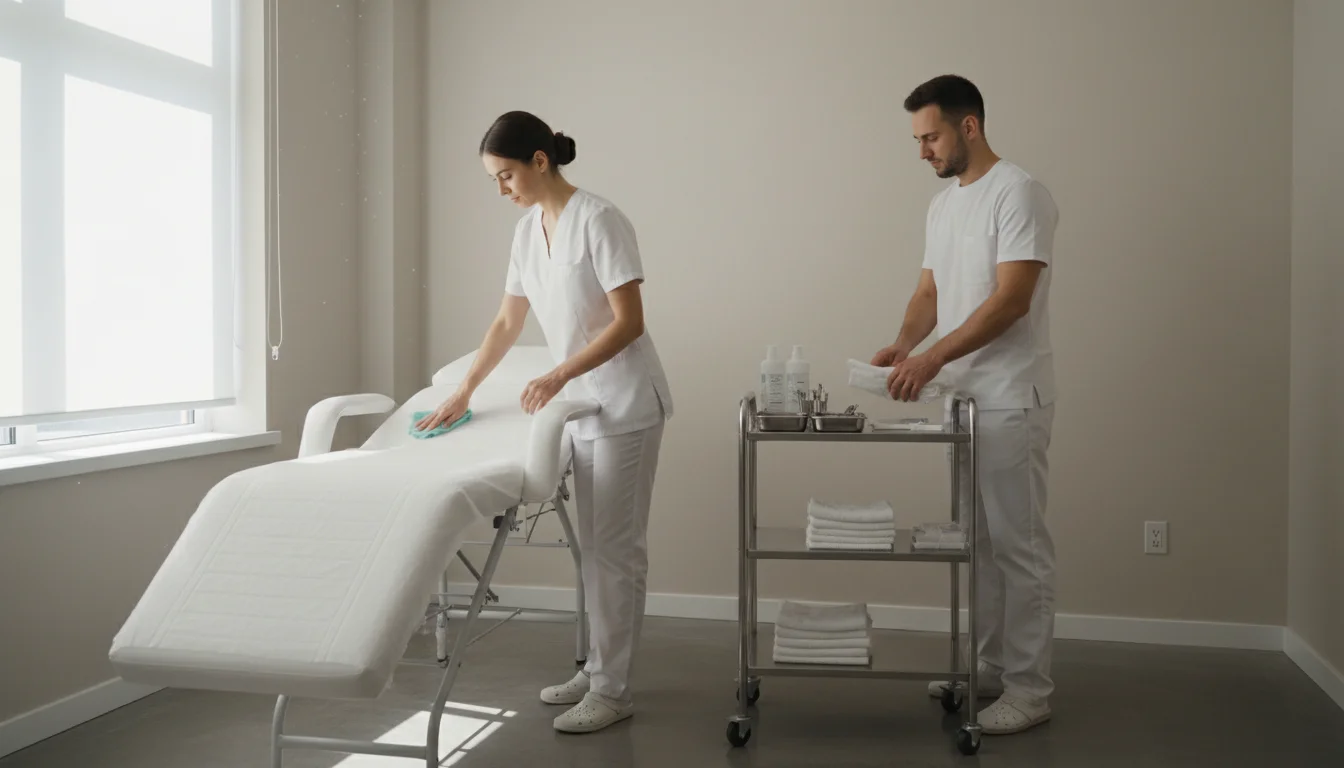
Okay, you got your raw PDRN. Now you have to prep it. This is a world away from mixing a yogurt mask in a bowl. You need a sterile, dedicated workspace. Picture a dermatologist’s procedure room, you need to mimic that level of clean, just on a smaller scale. Wipe down every single surface with a hospital-grade disinfectant. I tell people to look for solutions with quaternary ammonium compounds, which are standard in clinics because they kill a huge range of bacteria and viruses.
Common Mistakes: Just wiping with rubbing alcohol is not enough for real sterilization. It evaporates way too fast and often fails to kill spores or some of the more resistant bacteria. And if you’re not wearing sterile gloves and a mask, you’re breathing and touching contaminants directly into your “serum.”
3. Dilution and Formulation: The Precision Challenge
Raw PDRN is way too strong to put directly on your skin. It has to be diluted with extreme precision into a carrier, like sterile saline or a hyaluronic acid serum. Scientific precision is everything here. If you’ve got PDRN powder, for example, you need a scale that’s accurate to 0.001 grams to measure it correctly. Then you have to do the math to figure out the right volume of your carrier to hit a safe concentration, which is usually somewhere between 0.5% to 2% PDRN for a topical product. This is straight-up chemistry, not guesswork. And that’s before you even think about adding preservatives to stop your concoction from turning into a bacterial soup, adding another layer of complexity and potential for error.
Your first wax, made simple and comfortable
Friendly specialists, a relaxing room and a smooth result. Find a welcoming studio near you.
Find a Studio Near You →Pro Tip: Get real lab-grade glassware like graduated cylinders and beakers for measuring. Don’t even think about using kitchen spoons or measuring cups. They hold onto residue and will contaminate your mix.
4. Incorporating Adjunctive Ingredients: Proceed with Caution
Many DIYers want to add more than just PDRN. They get excited and throw in other ingredients they’ve heard are good, like vitamin C, peptides, or growth factors. While these can be great on their own, mixing them without a deep understanding of their chemical interactions can make them useless or, worse, create something that actively irritates your skin. Vitamin C (L-ascorbic acid), for one, is notoriously unstable and will oxidize and go bad in a heartbeat if you mix it wrong. Plus, different ingredients need different pH levels to work. If you don’t have a pH meter and a solid grasp of cosmetic chemistry, you’re literally gambling with your face.
5. Storage and Shelf Life: A Breeding Ground for Bacteria?
Commercial serums go through intense testing to make sure they’re stable and won’t grow microbes. Your DIY PDRN serum has a completely unknown, and likely very short, shelf life. Without the right preservatives and sterile packaging, it can become a petri dish for bacteria, mold, and fungus in just a few days. Keeping it in a dark, airtight, sterile bottle (like an amber glass dropper) in the fridge might help a little, but it doesn’t solve the problem. The U.S. Food and Drug Administration (FDA) has clear guidelines on cosmetic safety, emphasizing that products need adequate preservation to prevent microbial contamination, a standard that is nearly impossible to meet in a home kitchen.
6. Application and Waxing: A Recipe for Inflammation
And this is where the DIY PDRN experiment really goes off the rails: combining it with waxing. Waxing is a rough process by design. It yanks hair out from the root, which creates thousands of tiny wounds, micro-trauma, in your skin. That trauma shows up as redness and swelling, and your skin’s protective barrier is temporarily shot. Putting a homemade PDRN serum, especially one that’s contaminated or mixed wrong, on that vulnerable skin is an absolute disaster waiting to happen. With the skin barrier broken, anything you put on top, good or bad, sinks in deeper. If your serum is contaminated, you’re basically injecting bacteria. If the concentration is too high, you’re looking at severe irritation, allergic reactions, or even chemical burns. The risk of getting folliculitis or other nasty post-waxing bumps goes through the roof.
I’ve had patients come into my office with terrible inflammatory reactions because they slathered some homemade potion onto freshly treated skin. I get why people are tempted to speed up healing after a wax with a “power” ingredient like PDRN, but when you’re using unregulated, homemade stuff, the risks are just so much greater than any possible reward. The American Academy of Dermatology Association (AAD) consistently warns against putting active ingredients on irritated or broken skin, recommending gentle, soothing products instead.
Common Mistakes: Applying any active serum right after waxing. Your skin needs to calm down, usually for 24 to 48 hours, before you introduce even professional-grade actives. For a DIY serum, the waiting period should be even longer, or better yet, don’t use it at all.
7. The Risk/Reward Breakdown
So, is DIY PDRN with waxing worth it? It’s a significant risk, period. The main upsides, saving some money and feeling in control of the ingredients, are completely eclipsed by the real dangers. You’re messing with raw biochemicals in a non-sterile environment with zero formulation expertise. In a clinic, PDRN treatments use sterile, precisely measured solutions administered by a trained professional (often with microneedling or injections) to guarantee safety and results. Topical PDRN serums from reputable brands are made by cosmetic chemists who know what they’re doing. Trying to do this yourself is reckless.
If you’re looking for skin regeneration, there are much safer, proven options. Go see a board-certified dermatologist. They can recommend the right treatments for you, whether it’s a professional PDRN application or another proven therapy. They can also help you build a safe at-home routine that actually works, without you having to risk your skin’s health. The promise of a cheap, quick fix often makes people ignore the serious dangers of playing cosmetic chemist, especially with an ingredient as potent as PDRN.
If you want great skin, you have to prioritize safety and evidence-based methods over kitchen experiments. While making your own custom skincare sounds cool, the reality of formulating a safe and effective PDRN serum, let alone using it after a skin-stressing procedure like waxing, is a high-stakes gamble that can lead to bad reactions and long-term damage. The smartest way to get the skin you want is to trust professionals and established product lines.
What is PDRN and how does it benefit skin?
PDRN (Polydeoxyribonucleotide) is a molecule from salmon DNA that helps regenerate skin. It works by encouraging cell growth, repairing damaged tissue, and boosting collagen, which all leads to better skin elasticity, more hydration, and a smoother texture.
Why is sterility so important for DIY serums?
Sterility is critical because it stops bacteria, fungi, and other microbes from growing in your serum. A contaminated product can give you a nasty skin infection, trigger major irritation, or cause an allergic reaction, particularly if you apply it to skin that’s already compromised.
Can I use a DIY PDRN serum immediately after waxing?
No. Absolutely do not apply any active serum, especially a homemade one, right after waxing. The waxing process creates tiny openings in your skin, leaving it extremely vulnerable to the irritation, inflammation, and infection that a contaminated or poorly formulated product can cause.
What are the main risks of using DIY PDRN serums?
The biggest risks are contamination from microbes, using the wrong ingredient concentrations (either too weak to work or strong enough to burn you), chemical instability, allergic reactions, and serious skin damage like inflammation or chemical burns.
Are there safer alternatives to DIY PDRN for skin regeneration?
Yes, plenty. Safer options include professionally formulated PDRN serums from good brands, in-office PDRN treatments from a dermatologist, or other proven therapies like microneedling, laser treatments, or prescription retinoids, all done under professional supervision.


