 By Editorial Team
Key Takeaways
- Niacinamide (vitamin B3) tackles post-hair removal redness by calming down inflammation and beefing up your skin’s barrier.
- Wait 24 hours after your wax before using a niacinamide serum or cream, applying it too soon will just cause more irritation.
- Stick to a 2-5% niacinamide formula. Anything stronger, especially on just-waxed skin, can trigger redness and flushing.
- For best results, use your niacinamide alongside hydrators like hyaluronic acid and ceramides to double down on barrier repair and soothe the area.
- You won’t see big changes overnight. Use it consistently for a few weeks to really build up skin resilience and cut down on redness long-term.
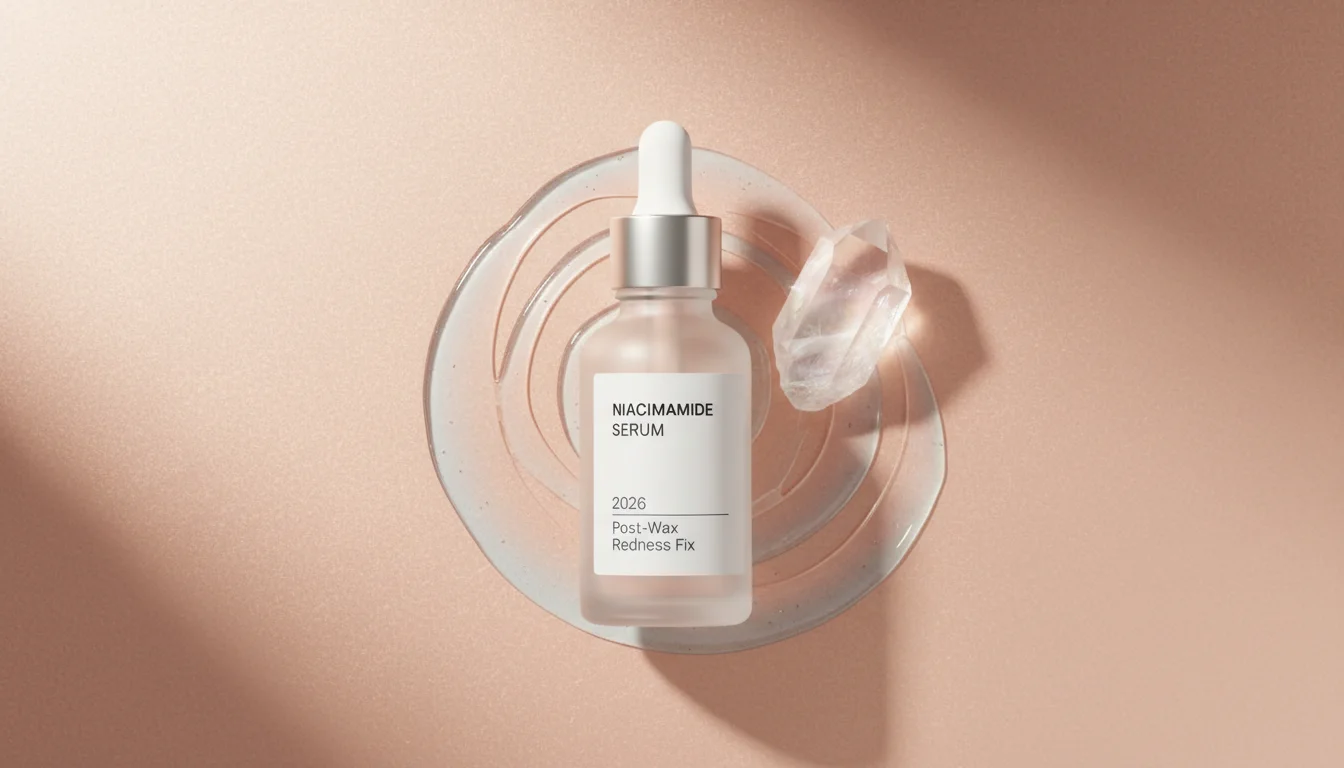
Niacinamide is one of the best things you can use to calm skin after hair removal because it strengthens the skin’s barrier and kills redness. This vitamin B3 derivative helps your skin recover by getting to the root of the problem.
1. Understand Niacinamide’s Mechanism
Niacinamide, or nicotinamide, is a water-soluble vitamin that helps with cellular energy and DNA repair, but what it really does for your skin is bolster its barrier function, reduce inflammation, and even regulate oil. If you’re dealing with redness and bumps after a wax, this is what you need to know. It tells your skin to produce more ceramides, which are the fatty lipids that hold your skin barrier together. A stronger barrier holds onto moisture better and keeps irritants out, exactly what you need after your pores have been stressed. It also has direct anti-inflammatory properties that tackle the redness you see right after a service. A study in the Journal of Clinical and Aesthetic Dermatology (https://jcadonline.com/niacinamide-topical-benefits/) backs this up, showing it significantly cuts down on facial redness and blotchiness.
Pro Tip: Always check the label for “niacinamide” or “nicotinamide.” If you see “niacin” (nicotinic acid), put it back, that form can cause a nasty flush and irritation, especially on sensitive skin.
2. Choose the Right Niacinamide Formulation
Getting the right product is everything. For freshly waxed skin, you want a serum or a lightweight cream because they sink in fast without clogging pores. The sweet spot for post-hair removal benefits is a 2% to 5% concentration. I’ve seen clients react poorly to higher percentages like a 10% niacinamide serum right after a wax, as it can cause tingling or flushing which defeats the whole purpose (save the stronger stuff for weeks later when your skin is fully healed). I also suggest looking for formulas that have other soothing ingredients like hyaluronic acid, panthenol, or centella asiatica to really help with hydration and calming. When you’re trying a new product, please patch test first on a small spot like behind your ear or on your inner forearm, particularly if you know you have sensitive skin.
Common Mistakes: Don’t slap on a high-concentration niacinamide (anything over 5%) right after getting waxed. You’ll make the irritation worse. Also, stay away from products with added fragrances or essential oils, which are just asking for a bad reaction on compromised skin.
Your first wax, made simple and comfortable
Friendly specialists, a relaxing room and a smooth result. Find a welcoming studio near you.
Find a Studio Near You →3. Implement Niacinamide into Your Post-Wax Routine
Timing is everything here. For the first 24 hours right after hair removal, your only job is to be gentle, cleanse lightly and cool the skin. Don’t use any active ingredients during that initial healing window. Once that 24-hour mark has passed and the skin isn’t screaming anymore, you can bring in the niacinamide.
3.1. Cleanse Gently
Start with a mild, sulfate-free cleanser. I often recommend something like the CeraVe Hydrating Facial Cleanser because it won’t strip your skin. Use lukewarm water and your fingertips, then pat the area dry with a clean towel. No rubbing.
3.2. Apply Niacinamide Serum or Cream
Get a pea-sized amount of your niacinamide product and gently pat it over the waxed area. Let it absorb completely before you do anything else. If you’re using a serum, you’ll want to follow it with a simple, non-comedogenic moisturizer to create a seal and add another layer of hydration.
3.3. Hydrate and Protect
Follow up with a basic, fragrance-free moisturizer to lock in the niacinamide and keep the skin hydrated. Look for ingredients like ceramides, glycerin, or hyaluronic acid. Then, during the day, you must finish with a broad-spectrum sunscreen with an SPF of 30 or higher. Freshly waxed skin is a magnet for sun damage and hyperpigmentation. A popular option like the EltaMD UV Clear Broad-Spectrum SPF 46 is great because it already contains niacinamide.
Pro Tip: If you’re still getting redness or ingrown hairs a few days later, you can try pairing niacinamide with a gentle exfoliant containing salicylic acid a few days after the wax, but never on the same day. This combination helps prevent future bumps while the niacinamide calms the irritation you already have.
4. Maintain Consistency for Long-Term Benefits
You might feel some immediate soothing, but the real benefit of niacinamide, strengthening your skin barrier and reducing chronic redness, comes from consistent, long-term use. Make it a part of your daily routine, applying it once or twice a day as your skin allows. You should expect to see real improvements in skin resilience and a more even tone after several weeks. In fact, a clinical trial published in Dermatologic Surgery (https://pubmed.ncbi.nlm.nih.gov/17147561/) showed that 12 weeks of continuous topical niacinamide use improved things like fine lines and hyperpigmentation. That long-term commitment directly improves your skin’s recovery after hair removal.
Common Mistakes: Expecting instant results. Skincare takes time. Don’t discontinue it after a few days just because the redness isn’t totally gone. Also, remember that neglecting other parts of post-wax care, like avoiding tight clothing or excessive heat, can undermine everything the niacinamide is trying to do.
5. Monitor Your Skin’s Response
Everyone’s skin is different, so you have to watch how yours reacts to any new product. Niacinamide is generally very well-tolerated, but some people might get a bit of mild redness or itching when they first start. If you notice irritation that won’t quit, pull back on how often you’re applying it (maybe try every other day) or find a product with a lower concentration. If it still bothers you, stop using it and check in with a dermatologist. Pay attention to how your skin feels. Is it less reactive, smoother, and more hydrated? These are good signs that the niacinamide is working for you. Keeping a simple skincare diary can be a great way to track your progress and figure out any triggers.
Can I use niacinamide immediately after hair removal?
No, wait at least 24 hours. Applying it sooner can cause more irritation on super-sensitive skin, so give your skin a day to calm down first.
What concentration of niacinamide is best for post-wax care?
A concentration of 2% to 5% is ideal. It’s effective for soothing and barrier support without being too harsh for freshly treated skin.
Can niacinamide prevent ingrown hairs?
It can indirectly help. Its anti-inflammatory properties calm irritation around the follicle that can lead to blockages, but for direct prevention, you’ll still want to add gentle exfoliation a few days after your wax.
How often should I apply niacinamide after hair removal?
After the initial 24-hour waiting period, you can apply it once or twice daily. Consistency is what gets you the long-term benefits in reducing redness and improving skin health.
Are there any ingredients I should avoid combining with niacinamide after hair removal?
Yes. Immediately after waxing, don’t combine niacinamide with strong acids like high-concentration AHAs or BHAs, or with retinoids. Focus on gentle, hydrating, and calming ingredients instead.
Adding niacinamide to your post-hair removal routine is a smart move for calmer, stronger skin, provided you choose the right formulation and apply it at the right time. This simple step helps manage the most common after-wax problems, leading to smoother, more comfortable results. For more ways to manage post-wax discomfort, explore waxing pain relief expert secrets. You might also be interested in how skincare supplements boost waxing comfort.


