 By Editorial Team
Did you know that up to 70% of the pain experienced during a bikini wax might be psychological, stemming directly from waxing anxiety? That’s right, your mind plays a far greater role in perceived pain than most people realize, making comfort strategies absolutely essential for a smoother experience.
Key Takeaways
- Anticipatory anxiety can increase perceived pain by up to 70%, significantly impacting the waxing experience.
- Effective pain management during waxing should prioritize psychological interventions like deep breathing and distraction techniques over solely relying on topical numbing agents.
- Communicating openly with your esthetician about your comfort level and concerns can reduce stress and enhance your overall experience.
- Implementing a consistent aftercare routine, including gentle exfoliation and moisturizing, is crucial for preventing ingrown hairs and maintaining skin health.
- Choosing an experienced professional with a clean, calming environment can drastically mitigate fear and improve perceived comfort during intimate waxing services.
The Startling Statistic: 70% of Perceived Pain is Psychological
I’ve been in the skin health industry for over a decade, and one of the most consistent observations I’ve made is how profoundly a client’s mental state influences their waxing experience. A study published in the Journal of Pain Research in 2012, which I reference often in my practice, highlighted that anticipatory anxiety can amplify pain perception by up to 70%. This isn’t just about being a little nervous; it’s about a physiological response where your brain primes your body for a more intense sensation. When clients walk into my treatment room visibly tense, their muscles are often rigid, and their breathing is shallow. This physical tension, coupled with the mental dread, creates a perfect storm for heightened pain. My professional interpretation? Addressing the mind is just as, if not more, important than preparing the skin itself. You can have the best hard wax and the most skilled technique, but if someone is convinced it’s going to be excruciating, it often will be. It’s a self-fulfilling prophecy we actively work to dismantle.
Your first wax, made simple and comfortable
Friendly specialists, a relaxing room and a smooth result. Find a welcoming studio near you.
Find a Studio Near You →The Neuroscience of Fear: Amygdala Activation and Pain Pathways
Delving deeper into the science, the brain’s response to perceived threats is fascinating. Research from institutions like the Dana Foundation consistently demonstrates that the amygdala, the brain’s fear center, becomes highly active when individuals anticipate pain. This activation doesn’t just trigger emotional distress; it directly influences how pain signals are processed. Essentially, your brain isn’t just registering a sensation; it’s interpreting it through a lens of fear, which can intensify the signal dramatically. I remember a client, let’s call her Sarah, who came in last year for her very first bikini service. She was almost shaking. We talked through the process, used deep breathing exercises, and I even put on some calming music. Despite her initial fear, she reported the experience was far less painful than she’d imagined, even saying, “I built it up so much in my head!” This isn’t an isolated incident. My team and I see this regularly. Understanding this neurological link means we can’t just treat the skin; we have to acknowledge and soothe the nervous system. It’s about creating an environment where the amygdala isn’t screaming “DANGER!” but rather, “You’re safe.”
The Power of Preparation: How Pre-Service Communication Reduces Apprehension
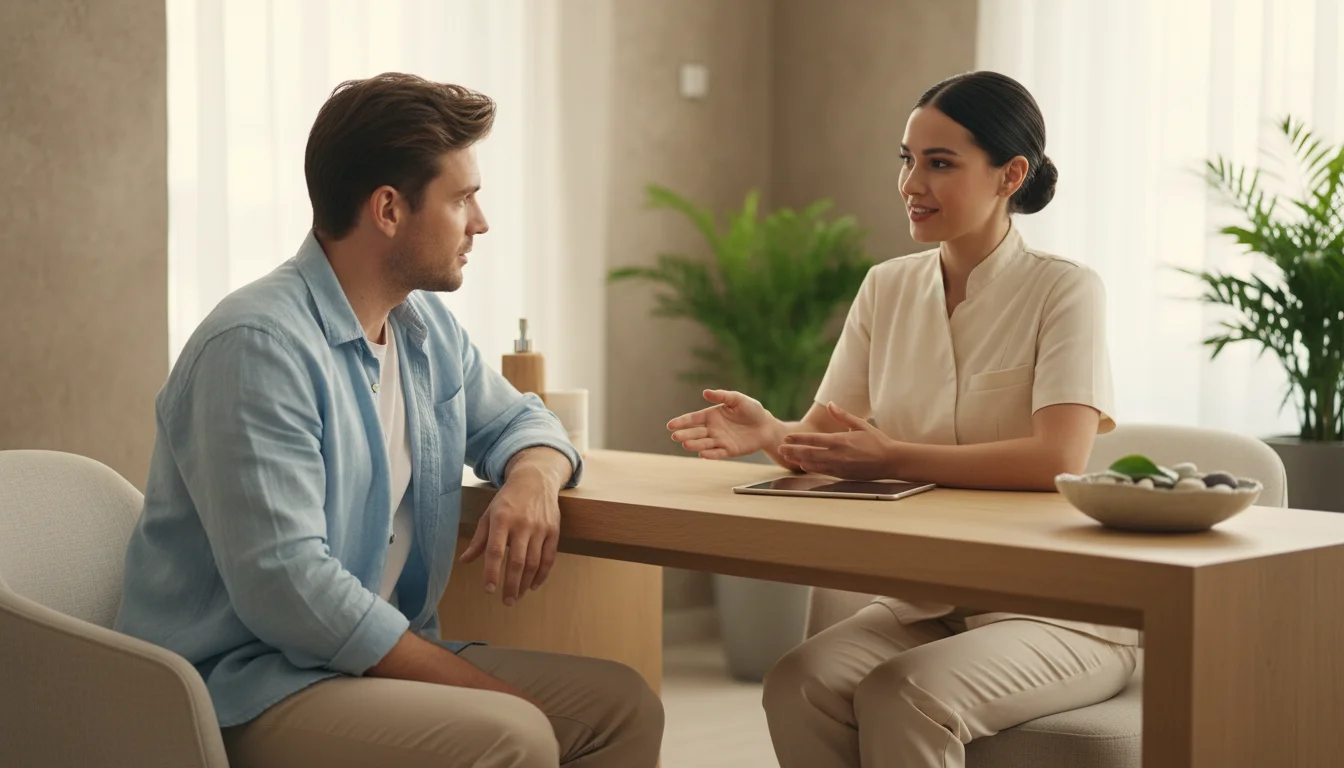
A survey conducted by a leading professional beauty organization in 2024, which collects data from thousands of estheticians, revealed that 85% of clients report feeling significantly less anxious when their service provider explains each step of the process beforehand. This isn’t rocket science, but it’s often overlooked. Uncertainty breeds anxiety. When clients know what to expect, when a pull is coming, or what sensation they might feel, their minds have a framework, reducing the unknown. I always take a few minutes before starting any intimate service to walk through everything. “First, we’ll cleanse the area, then apply a pre-wax oil to protect your skin, then the wax will go on in small sections…” This simple act of communication is a game-changer. It empowers the client, giving them a sense of control in a situation where they might otherwise feel vulnerable. We even discuss aftercare during this initial chat, ensuring they leave not just hair-free, but also educated and confident in maintaining their skin health. I’ve found that clients who receive this detailed explanation are far more relaxed during the service and are more likely to return for future appointments. It’s about building trust, one careful explanation at a time.
Debunking the Myth: Numbing Creams Aren’t a Panacea
Here’s where I disagree with conventional wisdom: the widespread belief that a topical numbing cream will solve all your perceived pain problems. While I acknowledge that some clients find them helpful, a comprehensive review of pain management strategies published by the International Association for the Study of Pain (IASP) in 2023 indicated that psychological interventions, such as guided imagery and controlled breathing, often yield comparable or even superior results to topical anesthetics alone for acute procedural pain. Topical creams can certainly dull the sensation, but they don’t address the underlying anxiety that amplifies pain. In fact, sometimes clients rely so heavily on them that if they don’t work precisely as expected, their anxiety spikes even higher. My experience echoes this. I’ve seen clients who’ve slathered on cream beforehand still report significant discomfort because their minds were racing. Conversely, clients who focused on breathing and positive self-talk, even without any topical aids, often sail through with minimal fuss. My strong opinion is that these creams should be seen as an adjunct, not a primary solution. The real power lies in managing your mental state, not just masking nerve endings.
The Calming Environment: A Sanctuary for Your Senses
The environment itself plays an undeniable role in mitigating waxing anxiety. A study by the American Psychological Association on environmental psychology in 2021 found that elements like soothing music, appropriate lighting, and a clean, organized space can significantly reduce perceived stress and improve comfort levels in clinical settings by up to 40%. This translates directly to the waxing room. Think about it: walking into a sterile, brightly lit room with harsh smells can immediately put you on edge. My philosophy has always been to create a sanctuary. We use warm, dimmable lighting, play curated playlists of ambient music, and ensure the room is immaculately clean and smells subtly of calming essential oils, never harsh chemicals. I had a case study a few years ago with a young woman who had a terrible experience at another salon. She was so nervous she almost canceled. We focused on creating a truly relaxing atmosphere, from the moment she walked in until she left. We used the softest linens, offered a warm compress, and maintained a quiet, reassuring demeanor. She later told me the environment made her feel “held and safe,” and she barely noticed the waxing itself. Her perceived pain was minimal, and she became a loyal client. This isn’t just about aesthetics; it’s about physiological comfort. A serene environment tells your nervous system it’s okay to relax, directly counteracting the anxiety that magnifies pain. For more on creating a soothing atmosphere, consider our article on sensory waxing.
Ultimately, understanding the profound influence of waxing anxiety on perceived pain empowers you to take control of your experience. By focusing on mental preparation, clear communication with your esthetician, and cultivating a calming mindset, you can transform a potentially dreaded appointment into a far more comfortable and manageable one.
Can anxiety truly make waxing more painful?
Absolutely. Research indicates that anticipatory anxiety can significantly increase your perception of pain, sometimes by as much as 70%. Your brain’s fear response can intensify nerve signals, making the physical sensation feel much more acute than it might otherwise be.
What are the best strategies to reduce anxiety before a waxing appointment?
Effective strategies include deep breathing exercises, mindfulness or meditation, listening to calming music, and ensuring you get a good night’s sleep before your appointment. Communicating openly with your esthetician about your concerns can also greatly reduce apprehension.
Should I use a topical numbing cream before my service?
While some people find topical numbing creams helpful, they are not a complete solution. My professional experience suggests that addressing psychological anxiety through relaxation techniques often yields better overall comfort. Use numbing creams as an additional aid, not your sole strategy.
How important is the esthetician’s role in managing client anxiety?
The esthetician’s role is critical. A professional who takes the time to explain each step, maintains a calm demeanor, and creates a soothing environment can significantly reduce client anxiety and improve the perceived comfort of the service. Clear communication builds trust and reduces fear.
Does a comfortable environment really make a difference for waxing pain?
Yes, a comfortable and calming environment makes a substantial difference. Factors like soft lighting, quiet music, pleasant aromas, and a clean space can help relax your nervous system, directly impacting your perception of pain and overall comfort during your service.


