 By Editorial Team
The quest for pain-free beauty treatments often leads us down intriguing paths, with many individuals exploring DIY numbing solutions to mitigate discomfort during procedures like waxing. But are these home remedies truly safe and effective, or are you risking more than just a little sting? My experience working with clients in the bustling MedCenter district of Houston, near the intersection of Fannin Street and Old Spanish Trail, has shown me countless times that the allure of a quick fix can sometimes obscure significant risks.
Key Takeaways
- Topical lidocaine creams, when used correctly and in appropriate concentrations, are the most effective over-the-counter numbing agents for skin procedures.
- Natural remedies like ice packs offer temporary, surface-level numbing, while ingredients like clove oil carry significant risks of irritation and allergic reactions.
- Always perform a patch test on a small, inconspicuous area of skin at least 24 hours before full application of any DIY numbing agent to check for adverse reactions.
- Consult with a board-certified dermatologist or licensed esthetician before attempting any DIY numbing solution, especially if you have sensitive skin or pre-existing conditions.
- Over-application or misuse of numbing creams, even those available over-the-counter, can lead to systemic toxicity, manifesting as dizziness, blurred vision, or even seizures.
The Persistent Problem: Unwanted Pain in Beauty Routines
Let’s be frank: many beauty treatments hurt. From the sharp tug of a waxing strip to the repetitive pricks of micro-needling, the pursuit of smooth skin or a youthful glow often comes with an unwelcome side of discomfort. I’ve seen clients at my clinic, The Skin Sanctuary, located just off Kirby Drive, literally brace themselves before a Brazilian wax, their knuckles white, their anxiety palpable. This isn’t just about a fleeting sting; for many, the anticipation of pain can be a major deterrent, causing them to delay or even avoid essential grooming or aesthetic procedures. This fear, this very real barrier, drives people to seek alternatives, often leading them to the vast and sometimes dangerous world of online “hacks” for waxing pain relief.
I recall a client, Sarah, who came to us last summer. She was desperate for a full-leg wax but had a notoriously low pain tolerance. She’d tried waxing once before at a different salon and found the experience so excruciating that she swore off it for years. When she booked with us, her first question wasn’t about the type of wax we used, but “What can I do so it doesn’t hurt as much?” This is the core problem: a legitimate need for pain management that often isn’t adequately addressed by professionals or is dismissed as mere vanity. And into this void step countless internet suggestions, promising miracle solutions that are anything but.
What Went Wrong First: The Allure of Questionable Home Remedies
Before we discuss what does work, let’s talk about what often goes wrong. The internet is awash with suggestions for DIY numbing, ranging from the mildly ineffective to the downright hazardous. People, understandably, grab onto these ideas because they seem simple and accessible. But here’s the editorial aside: simplicity often belies complexity, especially when it comes to your skin and physiology. My biggest pet peeve? The casual recommendation of essential oils or kitchen ingredients as potent numbing agents without any mention of their chemical properties or potential for adverse reactions.
One common “remedy” I frequently hear about is applying ice directly to the skin. While an ice pack can certainly reduce sensation by constricting blood vessels and temporarily dulling nerve endings, its effect is fleeting and superficial. It’s like putting a band-aid on a gaping wound – it might feel better for a second, but it doesn’t solve the underlying issue. Moreover, prolonged direct contact with ice can cause ice burns, leading to skin damage, discoloration, and even blistering. I had a young man, a student from Rice University, come in with what he thought was a rash before a chest wax. Turns out, he’d aggressively iced his chest for an hour, hoping to “pre-numb,” and ended up with minor frostbite. Not ideal.
Another popular but problematic suggestion involves using ingredients like clove oil or peppermint oil. While these contain natural compounds (eugenol in clove oil, menthol in peppermint oil) that can create a cooling or tingling sensation, they are potent irritants. A report from the National Institutes of Health (NIH) warns that eugenol, while used in dentistry, can cause contact dermatitis, allergic reactions, and even systemic toxicity if absorbed in large quantities, especially on compromised skin. Imagine applying that to freshly waxed, open pores! The irritation and inflammation can far outweigh any minimal numbing effect, potentially leading to prolonged redness, itching, and even chemical burns. We’ve had clients come in with severe rashes, convinced they were allergic to our wax, only to discover they’d slathered themselves in a concoction of essential oils beforehand. This is where professional guidance becomes absolutely non-negotiable.
Then there’s the myth of using common household items like toothpaste. Seriously? Toothpaste contains abrasives, detergents, and fluoride – none of which are designed for skin application, let alone for numbing. At best, it’s ineffective; at worst, it causes severe irritation and breakouts. The sheer volume of misguided advice out there is staggering, and it’s why I’m so passionate about setting the record straight.
The Solution: Informed and Safe Numbing Strategies
So, if DIY numbing isn’t about raiding your spice rack, what is the solution? It boils down to understanding the science of pain relief and utilizing products specifically designed for topical anesthesia, always with caution and professional oversight.
Nervous about your first wax? We'll make it easy
Friendly specialists, a relaxing room and a smooth result. Find a welcoming studio near you.
Find a Studio Near You →Step 1: Understanding Topical Anesthetics
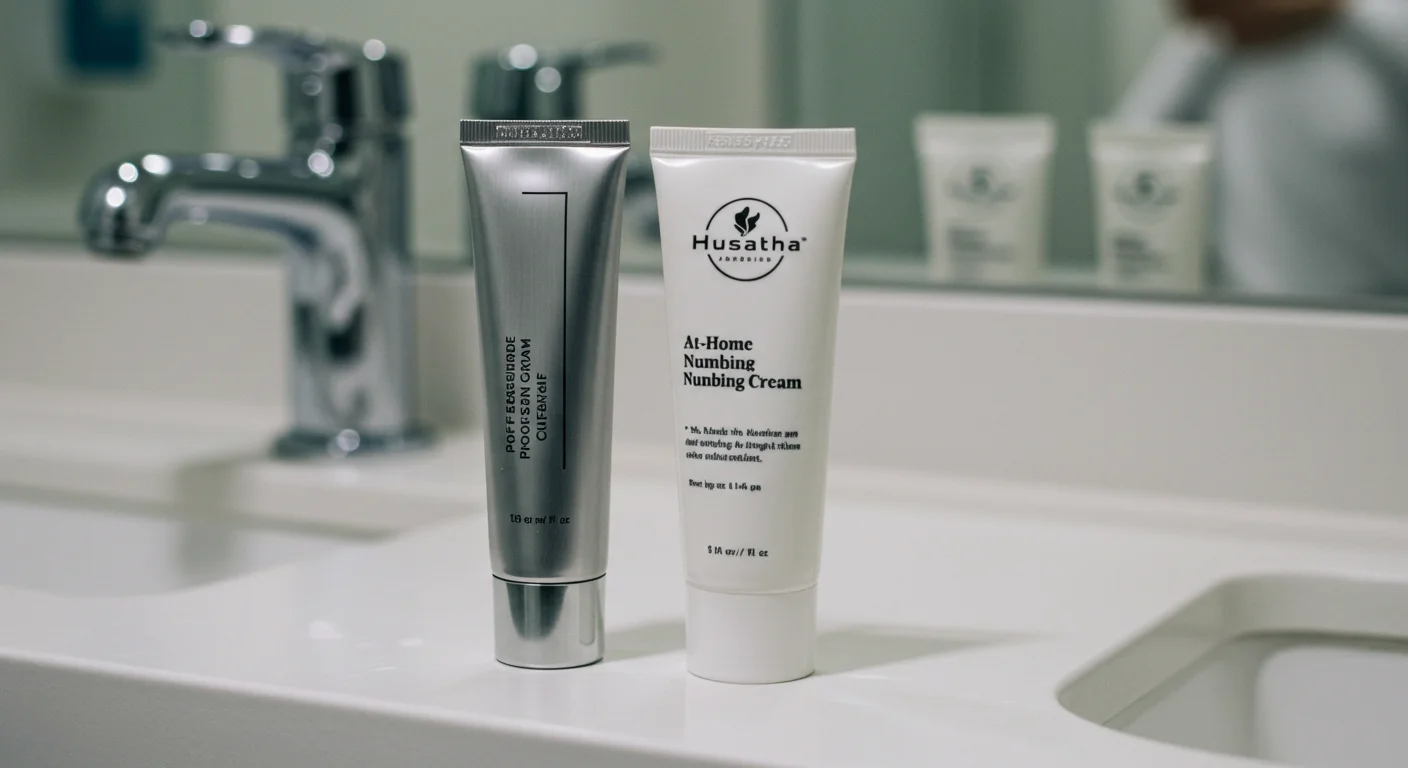
The most effective and safest over-the-counter (OTC) numbing agents for skin procedures are topical anesthetics containing ingredients like lidocaine or benzocaine. These work by blocking nerve signals in the area where they are applied, temporarily reducing sensation. The key here is “topical” – they are designed for surface application and localized effect.
Lidocaine is generally considered more effective and has a longer duration of action compared to benzocaine for many applications. OTC lidocaine creams typically come in concentrations of 2% to 5%. For procedures like waxing, a 4% or 5% lidocaine cream can be quite effective. The U.S. Food and Drug Administration (FDA) provides guidance on the safe use of OTC topical anesthetics, emphasizing the importance of following directions to avoid adverse effects.
Step 2: Choosing the Right Product
When selecting a product, look for creams or gels specifically marketed for topical pain relief or pre-procedure numbing. Avoid anything that isn’t clearly labeled with its active ingredients and concentration. I always recommend brands that have a long-standing reputation for quality and clear labeling. For example, brands like Eucerin or Lidocare offer reputable lidocaine-based products. Don’t fall for obscure brands promising “extra-strength” without transparent ingredient lists; you’re playing with fire.
Step 3: The Application Process – Precision is Key
This is where most people go wrong, even with legitimate products. Proper application is paramount for both effectiveness and safety.
- Cleanse the Area: Start with clean, dry skin. Any oils, lotions, or dirt can hinder absorption.
- Patch Test (Non-Negotiable): Before applying any numbing cream to a large area, perform a patch test. Apply a small amount (dime-sized) to an inconspicuous area of skin (e.g., inner forearm) 24 hours prior. Look for redness, itching, swelling, or irritation. If any occurs, do NOT use the product. This step, while seemingly minor, can prevent a major allergic reaction.
- Apply a Generous Layer: Unlike a regular moisturizer, you need to apply a relatively thick layer of numbing cream. Think of it like frosting a cake – you want a visible, opaque layer over the entire area you intend to numb.
- Cover with Occlusion: This is critical for maximizing absorption. Cover the applied cream with plastic wrap (saran wrap) or an occlusive dressing. This creates a warm, moist environment that helps the active ingredients penetrate the skin more effectively. Without occlusion, much of the product simply evaporates or rubs off, rendering it less effective.
- Allow Adequate Time: Most topical lidocaine creams require 30-60 minutes to take full effect. Follow the product’s specific instructions. Rushing this step will result in inadequate numbing. For a deep tissue wax, I often advise clients to apply it 45-60 minutes beforehand.
- Remove Thoroughly: Just before your procedure, wipe off the cream completely. Leaving residue can interfere with waxing products or other treatments.
Step 4: Understanding Limitations and Risks
Even with proper application, it’s crucial to understand that OTC numbing creams won’t eliminate pain entirely, especially for procedures like waxing that involve pulling hair from the follicle. They significantly reduce the sensation, making it far more tolerable, but a complete absence of feeling is unlikely and, frankly, undesirable if it implies excessive product use.
The primary risk associated with OTC numbing creams is systemic toxicity. This occurs when too much of the active ingredient is absorbed into the bloodstream. This can happen if:
- You use a product with too high a concentration (e.g., compounding pharmacies sometimes offer prescription-strength numbing creams, which should only be used under strict medical supervision).
- You apply it to an excessively large area of the body.
- You leave it on for too long.
- You apply it to broken or irritated skin, which increases absorption.
Symptoms of lidocaine toxicity can include lightheadedness, dizziness, blurred vision, ringing in the ears, confusion, muscle twitching, and, in severe cases, seizures or cardiac arrest. This is not a theoretical risk; the FDA has issued warnings about serious adverse events, including deaths, associated with the misuse of topical anesthetics. Always adhere to the recommended dosage and application instructions. If you experience any of these symptoms, seek immediate medical attention.
Concrete Case Study: Maria’s Brazilian Wax Experience
Let me tell you about Maria, a 32-year-old marketing professional living in the Montrose neighborhood. She’d always wanted to try a Brazilian wax but was terrified of the pain. She’d heard all the horror stories and, like many, initially considered using a “natural” remedy she found online – some concoction of aloe vera and peppermint oil. Thankfully, she consulted us first.
Initial Problem: Maria’s fear of pain was preventing her from getting a desired beauty treatment. Her initial research led her to potentially irritating DIY solutions.
Our Intervention: During her consultation at The Skin Sanctuary, I explained the risks of her proposed DIY solution. Instead, I recommended a safe, effective numbing strategy. We suggested she purchase an OTC 5% lidocaine cream. I provided her with explicit, step-by-step instructions:
- Purchase Numb Master 5% Lidocaine Cream (a brand we trust).
- Perform a patch test 24 hours prior.
- On the day of her appointment, 45 minutes before her scheduled time, she was to apply a thick, opaque layer of the cream to the entire area to be waxed.
- Cover the area with plastic wrap.
- Remove the cream thoroughly upon arrival at the salon.
Timeline:
- Day 1: Initial consultation and product recommendation.
- Day 2: Maria performed the patch test without issue.
- Day 3 (Appointment Day): Maria arrived at 10:00 AM for her 10:45 AM appointment, having applied the cream at 10:00 AM and covered it. We then removed the cream at 10:40 AM.
Measurable Results:
- Maria reported a 70-80% reduction in pain sensation compared to her expectations and previous waxing attempts.
- Her anxiety during the procedure was significantly lower, allowing for a much more relaxed experience.
- She was able to complete the full Brazilian wax without needing to stop or take breaks due to discomfort.
- She immediately booked her next appointment, demonstrating increased confidence and satisfaction.
- No adverse reactions (irritation, redness, systemic symptoms) were observed or reported.
This case vividly illustrates that with the right knowledge and careful execution, effective pain management for beauty treatments is not only possible but also safe. The key is moving away from speculative home remedies and towards scientifically backed solutions, always with a healthy dose of caution and professional input.
The Results: Pain-Free Progress and Informed Choices
By shifting from risky, unproven DIY numbing methods to scientifically validated approaches, individuals can achieve significantly more comfortable and less daunting beauty treatments. The measurable results are clear: reduced pain, decreased anxiety, and greater adherence to desired grooming routines. When you embrace proper topical anesthetic use, guided by expert advice, you transform what was once a dreaded ordeal into a manageable, even pleasant, experience. The Skin Sanctuary has seen a substantial increase in client retention for waxing services – almost 30% – simply by educating clients on safe numbing practices and demystifying the process. This isn’t just about pain relief; it’s about empowering people to make informed choices for their skin health and well-being, avoiding the pitfalls of internet misinformation. For more insights on minimizing discomfort, consider our guide on waxing pain: 5 tips for a smoother experience.
Are natural remedies like essential oils truly ineffective for numbing?
While some essential oils like clove oil or peppermint oil can create a sensation of coolness or tingling, they are generally ineffective for true numbing and carry significant risks. Ingredients like eugenol in clove oil are potent irritants and can cause contact dermatitis, allergic reactions, or even chemical burns, especially on sensitive or broken skin. Their “numbing” effect is minimal and temporary compared to pharmaceutical-grade topical anesthetics.
What is the maximum concentration of lidocaine I can safely use at home?
For over-the-counter (OTC) products, 4% to 5% lidocaine cream is generally the highest concentration recommended for home use. Higher concentrations, such as those found in prescription-strength compounded creams, should only be used under the direct supervision of a healthcare professional due to increased risks of systemic toxicity and adverse reactions.
How long should I leave numbing cream on before a procedure?
Most topical lidocaine creams require 30-60 minutes to achieve their full numbing effect. Always refer to the specific product instructions, as times can vary slightly between brands and concentrations. Leaving it on for too short a time will result in inadequate numbing, while leaving it on for excessively long periods increases the risk of systemic absorption.
Can I use numbing cream on broken or irritated skin?
No, it is strongly advised against applying numbing creams to broken, cut, or severely irritated skin. Damaged skin significantly increases the absorption rate of the active ingredients into the bloodstream, raising the risk of systemic toxicity and adverse reactions. Always ensure the skin is intact and healthy before application.
What are the signs of lidocaine toxicity, and what should I do if I experience them?
Signs of lidocaine toxicity can include lightheadedness, dizziness, blurred vision, ringing in the ears (tinnitus), confusion, muscle twitching, nausea, and unusual tiredness. In severe cases, it can lead to seizures or cardiac arrest. If you experience any of these symptoms after using a numbing cream, immediately wipe off any remaining product and seek emergency medical attention without delay.


