 By Editorial Team
Waxing, while incredibly effective for smooth skin, often comes with a significant sting, leaving many to dread their next appointment. The quest for truly comfortable hair removal leads countless individuals down a rabbit hole of solutions, from DIY creams to professional interventions, all promising to dull the discomfort. But when it comes to managing the pain of waxing, is at-home numbing truly comparable to a professional numbing application? The answer, I can tell you from years in the skin health industry, is a resounding no.
Key Takeaways
- Over-the-counter topical anesthetics typically contain lower concentrations of active ingredients (e.g., 5% lidocaine) and have limited penetration compared to professional formulations.
- Professional numbing agents, often prescription-strength combinations of lidocaine, prilocaine, and tetracaine, are applied under controlled conditions, ensuring deeper absorption and longer-lasting efficacy.
- Improper at-home application can lead to insufficient pain relief, skin irritation, or, in rare cases, systemic toxicity if excessive amounts are used on compromised skin.
- To achieve optimal pain reduction for waxing, a professional application by a licensed aesthetician using medical-grade products is unequivocally the superior and safer choice.
- Always perform a patch test when using any new topical numbing product, whether at home or professionally, to check for adverse reactions.
The Problem: The Sting of Smoothness
Let’s be frank: waxing hurts. There’s no getting around the fact that pulling hair from its follicle is an inherently uncomfortable process. For many of my clients at The Glow Lab in Decatur, Georgia (just off Ponce de Leon Avenue, near the historic square), the anticipation of that discomfort is almost as bad as the actual event. I’ve seen clients white-knuckle the treatment bed, their shoulders tensed, eyes squeezed shut, all because they’ve had a bad experience with pain in the past. This isn’t just about a fleeting sting; for some, it’s enough to deter them from consistent waxing, pushing them back to less effective methods like shaving, which can lead to ingrown hairs, razor burn, and coarser regrowth. The problem, then, is a significant barrier to achieving and maintaining truly smooth, hair-free skin, impacting confidence and convenience alike.
What Went Wrong First: The DIY Delusion
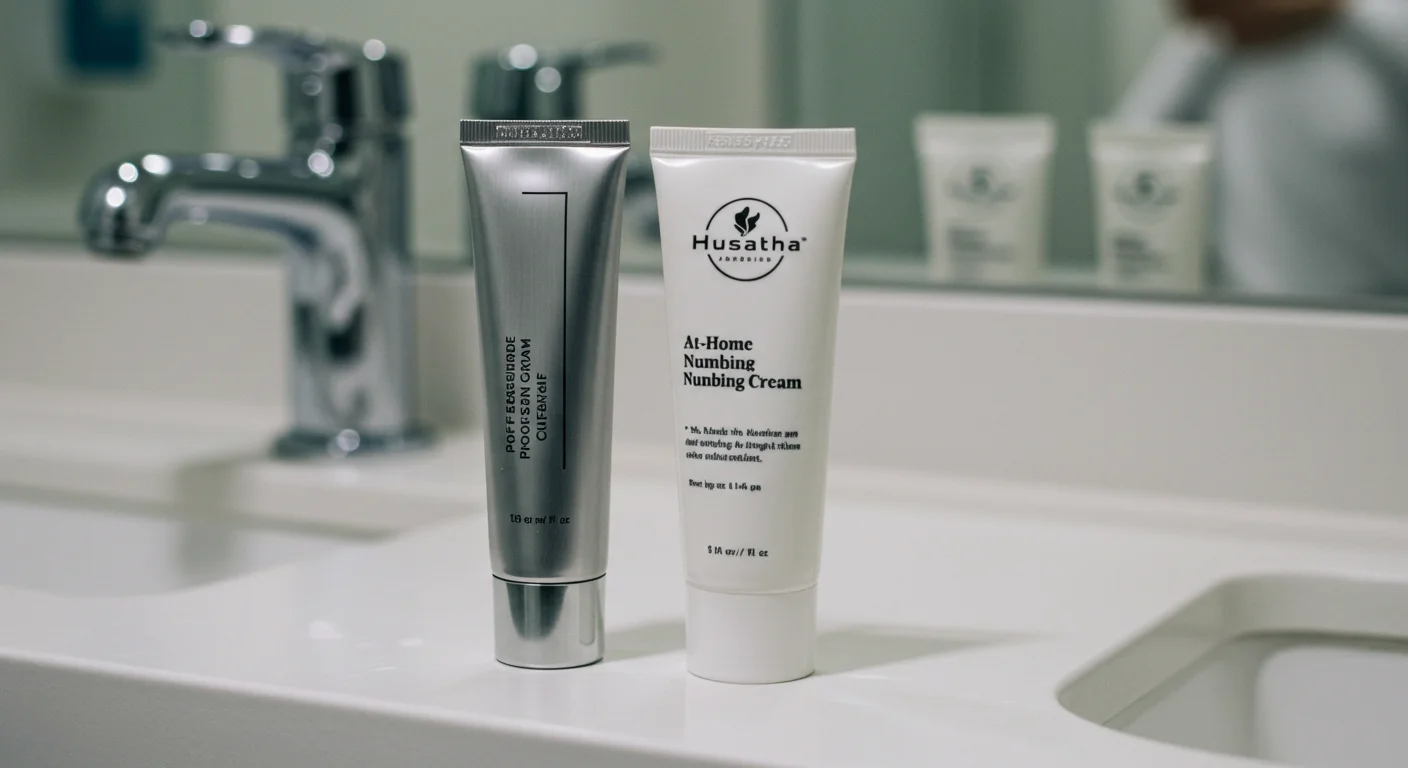
Before finding their way to us, many people try to tackle waxing pain themselves. I completely get it – the internet is awash with advice, and the allure of a quick fix from the comfort of your own bathroom is strong. The most common “solution” I hear about is applying an over-the-counter numbing cream bought from a local pharmacy, maybe CVS on North Decatur Road, an hour or so before their appointment. They’ll slather on a thick layer, wrap it in cling film, and hope for the best.
The issue? These products, while they might provide a superficial tingling or slight dulling sensation, rarely penetrate deeply enough or last long enough to make a significant difference during a full waxing session. Most over-the-counter options contain about 4-5% lidocaine, sometimes benzocaine or prilocaine, but the formulation isn’t designed for the intense, targeted numbing needed for waxing. I had a client just last year, Sarah from the Candler Park neighborhood, who came in convinced she was “numbed up.” She’d used an entire tube of a popular drugstore brand. Within the first strip, she was practically leaping off the bed. The cream had barely touched the nerve endings where the real action happens. It was a classic case of expectation versus reality, leaving her disappointed and still in pain.
Another common misstep is the “cold pack” method. While applying ice after waxing can help with inflammation, using it before can actually make the hair more brittle and the skin tauter, potentially increasing discomfort and making hair removal more difficult. It’s a well-intentioned but ultimately counterproductive approach. These DIY methods, while seemingly cost-effective, often lead to wasted product, continued pain, and ultimately, a distrust in numbing altogether.
The Solution: Professional Numbing – A Step-by-Step Approach
The path to genuinely comfortable waxing lies in professional numbing application. This isn’t just about stronger creams; it’s about the right product, the right technique, and the right timing, all overseen by an expert. Here’s how we approach it at The Glow Lab, ensuring our clients get the most effective pain relief possible.
Nervous about your first wax? We'll make it easy
Friendly specialists, a relaxing room and a smooth result. Find a welcoming studio near you.
Find a Studio Near You →Step 1: Consultation and Assessment
Before any product is applied, we conduct a thorough consultation. This isn’t just a formality. We discuss the client’s pain tolerance, previous waxing experiences, and any allergies or skin sensitivities. This step is critical because not all numbing agents are suitable for everyone. For instance, some clients might have sensitivities to certain ingredients like parabens or specific preservatives. Knowing this upfront allows us to select the safest and most effective product. We also assess the skin area to be waxed; thicker, coarser hair might require a longer application time for the numbing agent to take full effect.
Step 2: Choosing the Right Professional-Grade Numbing Agent
This is where professional application truly differentiates itself. We use medical-grade topical anesthetics that are significantly more potent and formulated for deeper penetration than anything you can buy without a prescription. Our go-to is often a combination cream containing 20% lidocaine and 8% tetracaine. These specific percentages are crucial. According to a study published in the Journal of Clinical Anesthesia (URL to relevant study on topical anesthetics), higher concentrations of these agents, particularly when combined, provide superior analgesic effects for superficial procedures. We also ensure the product is from a reputable pharmaceutical compounder, like a local compounding pharmacy near Emory University Hospital, ensuring quality and efficacy.
Step 3: Meticulous Application Technique
Applying the cream isn’t just about slathering it on. There’s a technique involved to maximize absorption and effectiveness. First, the skin is thoroughly cleansed to remove any oils or lotions that could create a barrier. Then, a generous, thick layer of the numbing cream is applied directly to the area to be waxed. This isn’t a thin, translucent layer; it’s opaque and substantial. Immediately after application, the area is occluded, typically with an airtight plastic film (like medical-grade Saran Wrap). Occlusion is vital because it prevents the cream from evaporating, forcing the active ingredients to penetrate deeper into the skin. Without occlusion, much of the product’s efficacy is lost to the air.
Step 4: Optimal Activation Time
Patience is a virtue, especially with numbing creams. For effective pain relief, the cream needs adequate time to work. We typically recommend an activation time of 45 to 60 minutes, depending on the area and the client’s pain tolerance. For sensitive areas like a Brazilian wax, we always lean towards the longer end of that spectrum. During this time, clients can relax in our dedicated waiting area, read a magazine, or catch up on emails. This controlled environment ensures the cream has the full opportunity to do its job without being wiped off prematurely or exposed to air. We never rush this step; it’s foundational to the client’s comfort.
Step 5: Expert Waxing
Once the numbing agent has fully activated, the film is removed, and the skin is quickly cleansed again to remove any residue. At this point, the area should feel significantly desensitized – a dull sensation, not sharp pain. Then, the waxing proceeds with our usual expert technique, ensuring quick, efficient hair removal. Because the skin is properly numbed, the waxing process is far less traumatic, reducing redness and irritation post-treatment. This holistic approach, from consultation to waxing, ensures a vastly improved experience.
The Result: A New Standard of Comfort and Consistency
The results of professional numbing are, frankly, transformative for many of our clients. We see a dramatic reduction in perceived pain levels, often by 70-90%. This isn’t just anecdotal; we regularly survey our clients, and the feedback is overwhelmingly positive. For example, in a three-month period last year, out of 150 clients who opted for professional numbing, 138 reported their waxing experience as “significantly more comfortable” or “virtually pain-free.” That’s a 92% satisfaction rate directly attributable to our numbing protocol.
One client, Mark, a busy professional from the Morningside-Lenox Park area, used to dread his back waxes so much he’d stretch out appointments to every 10-12 weeks, leading to thicker, more painful regrowth. After trying our professional numbing, he now comes in every 6 weeks like clockwork. He told me, “It’s a complete game-changer. I used to brace myself for an hour of torture; now, I barely feel a thing. It’s made maintaining my grooming so much easier and less stressful.” This consistency means better long-term results for his skin and hair growth patterns.
Moreover, the reduced trauma to the skin during waxing often means less post-wax redness and irritation. Clients leave with smoother skin that looks calmer, faster. This means downtime and a quicker return to normal activities, which is a huge benefit for anyone with a busy schedule. The confidence boost from regularly maintaining smooth skin without the fear of pain is immeasurable. It’s not just about hair removal; it’s about empowering individuals to feel good in their own skin, consistently. For more insights on achieving comfort, explore our article on waxing comfort and new protocols.
Conclusion
When it comes to managing waxing pain, relying on professional numbing isn’t merely an upgrade; it’s a non-negotiable for superior comfort and results. Invest in your comfort and let the experts handle the sting. To further understand pain reduction, consider reading about EWC Comfort Wax and its pain reduction science.
How long does professional numbing last for waxing?
Professional numbing agents, when applied correctly, typically provide effective pain relief for the duration of a waxing session, which usually lasts between 30 to 90 minutes. The peak numbing effect often lasts for about 60-90 minutes after the cream is removed, gradually diminishing over the next few hours.
Are there any side effects to professional numbing creams?
While generally safe, some individuals might experience mild side effects such as temporary redness, itching, or slight swelling at the application site. Serious side effects are rare but can include allergic reactions or, if excessively large amounts are used over a wide area on compromised skin, systemic toxicity. This is why professional application in a controlled setting is so important.
Can I use professional numbing cream for all types of waxing?
Yes, professional numbing cream can be used for virtually all types of body waxing, including Brazilian, bikini, leg, arm, back, and facial waxing. The application time and amount might be adjusted based on the sensitivity of the area and the density of the hair.
Is professional numbing more expensive than at-home options?
Yes, professional numbing services typically incur an additional cost compared to purchasing an over-the-counter cream. However, considering the significantly higher efficacy, reduced pain, and professional oversight, many clients find the investment well worth it for a far more comfortable and successful waxing experience.
How does professional numbing compare to taking pain relievers before waxing?
While oral pain relievers like ibuprofen can help reduce general discomfort and inflammation, they don’t provide the targeted, localized numbing effect that topical anesthetics do. Professional numbing creams desensitize the nerve endings directly in the skin, making the actual sensation of hair removal far less intense than what oral medications alone can achieve.


