 By Jessica Garcia
Sarah, a 32-year-old marketing pro, basically hated her waxing appointments. Yeah, the results were smooth, but the aftermath, the angry red skin and sensitivity, made her dread going back. Her skin was just always dry and easily irritated, and any attempt at hair removal or even exfoliation felt like an attack. She’d gone through tons of soothing creams over the years, but they were all just band-aids that never fixed the real problem: her skin needed serious skin barrier repair. She was getting desperate for something that would actually make her skin tougher and the whole process less painful. A peptide serum seemed like a long shot, right?
Key Takeaways
- Peptide serums with biomimetic types, ones that mimic your body’s own signals, work by telling your skin to ramp up its natural repair, building a stronger barrier.
- Using a pre-wax serum loaded with barrier-building ingredients can mean the difference between hours of post-wax redness and just a mild flush that’s gone fast because your skin was ready for the stress.
- If you use a peptide product consistently, you’re literally rebuilding the ‘mortar’ between your skin cells, which makes your skin less likely to freak out from stressors like waxing.
- For the best barrier-boosting results, check the label for a cocktail of ceramides, hyaluronic acid, and multiple peptide complexes.
- Adding the right skincare can turn a dreaded maintenance task like waxing into a much more comfortable, almost routine appointment.
The Persistent Problem: A Compromised Skin Barrier
Sarah’s skin had gone past sensitive into full-on reactive territory. We’re talking a gust of wind, a new face wash, or a tough week at work causing instant redness and that awful tight feeling. Her esthetician, Maria (who’s been doing this for over 15 years), was always pointing out how fragile her skin was. “Think of your skin barrier as a brick wall,” Maria told her once. “A strong one keeps moisture in and junk out, but yours has some definite cracks.” That clicked for Sarah. It felt exactly like her skin was always fighting a losing battle. The waxing itself was a direct assault on that weak wall. The process would just tear it down even more, meaning more inflammation and a much longer time to calm down afterward.
That skin barrier Maria was talking about is technically the stratum corneum, the very top layer of your skin. It’s made of skin cells (corneocytes) held together by a mix of fats (lipids), exactly like bricks and mortar. This “wall” is what keeps your skin hydrated and protects you from everything the world throws at it. When the mortar starts to crumble, your skin gets dry, itchy, and inflamed, making it way more prone to irritation from things like waxing. It’s not just an idea. A review in the Journal of Clinical and Aesthetic Dermatology confirms that a healthy barrier is the absolute foundation for skin that can handle stress.
Enter the Solution: Byoma Peptide Serum
So Maria suggested Sarah try something new: a peptide-rich serum built for barrier support. “I’ve been looking into the peptide benefits for skin health,” she said, giving Sarah a little bottle of the Byoma Peptide Serum. “The peptides in this basically tell your skin cells to get to work and repair things.” Sarah had her doubts, having been let down by a dozen other serums before. But this one was different. It wasn’t just about adding moisture. It was about rebuilding the barrier. Prepping her skin *before* the wax instead of just doing damage control *after*… that felt like a totally new strategy.
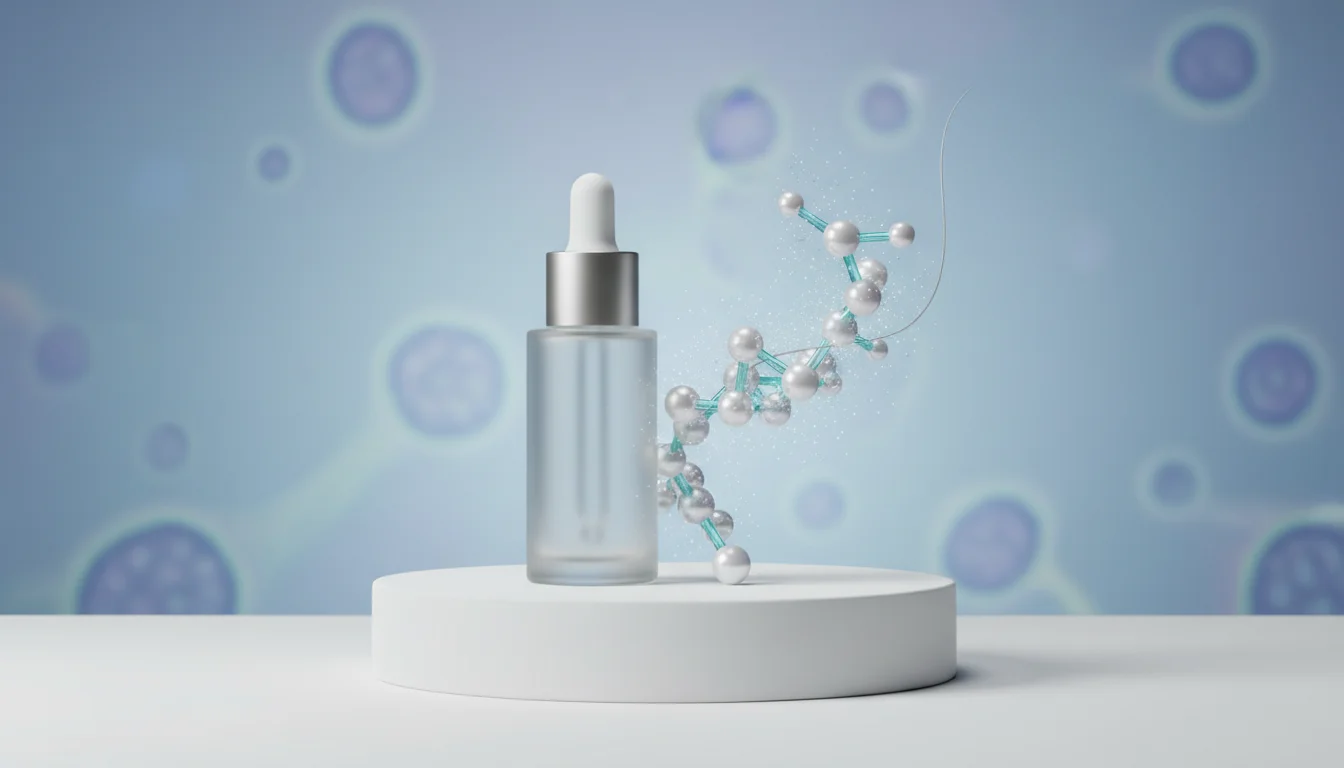
Peptides are just small chains of amino acids, which are what make up proteins like collagen in your skin. In skincare, they’re like little messengers that give your skin cells instructions. Some tell the cells to make more collagen, some calm down inflammation, and the important ones for Sarah’s problem tell the cells to repair the barrier. The Byoma serum she used has a mix of tri-peptide and tetra-peptide complexes, plus ceramides and hyaluronic acid. You need both. Ceramides are the actual fatty ‘mortar’ of your skin barrier, and hyaluronic acid is a sponge for water, pulling in moisture. This kind of combo attacks the problem from two sides for a much better shot at repair. I always tell my clients to keep an eye out for specific peptides with solid research behind them, like Palmitoyl Tripeptide-1 or Palmitoyl Tetrapeptide-7, because we know they’re effective communicators for skin cells.
Nervous about your first wax? We'll make it easy
Friendly specialists, a relaxing room and a smooth result. Find a welcoming studio near you.
Find a Studio Near You →The Pre-Wax Regimen: A Game Changer
So Sarah started using the serum every day, morning and night. For the two weeks before her next wax, she was super diligent about it, really focusing on getting her skin hydrated and calm. Then, on the day of the appointment, she put a good thick layer of the pre-wax serum on about an hour before she left for the studio. This was a whole new step for her. Usually she’d just wash her face and go. The idea was to arm her skin for the wax, to build up its defenses so it could take the hit.
The logic of a pre-wax serum is pretty simple: a stronger barrier is a tougher barrier. When skin is properly hydrated and its lipid shield is solid, the physical trauma of ripping wax off causes a lot less damage. It’s like priming a wall before you paint it for a better result. The peptides in the serum get to work ahead of time, firing up the skin’s own healing systems and dialing down the inflammatory signals before the wax even touches her. It’s a proactive strategy that so many people miss because they’re only thinking about aftercare, but getting ahead of the problem is a much better plan.
The Appointment: A Noticeable Difference
When Sarah got on the table, Maria did her usual check and immediately noticed something. “Your skin feels… different,” she said, touching Sarah’s arm. “Softer, more flexible.” As Maria started waxing, Sarah tensed up, expecting that familiar sharp sting and the instant flush of red that always followed. But it didn’t really come. I mean, it’s still waxing, it’s not a massage, but the pain was way less intense, and the redness was nowhere near as bad as it normally was. Sarah realized she could actually relax and breathe, and she couldn’t help but smile.
Maria saw the difference right away, too. Sarah’s skin wasn’t nearly as inflamed, and she had almost none of the little red bumps that usually popped up. “This is amazing,” Maria said while putting on the post-wax lotion. “Your skin took that so much better. It’s already calming down.” Seeing less irritation that quickly is a dead giveaway that the skin barrier is stronger. When that barrier is working right, it keeps the body’s inflammatory reaction from going haywire when you traumatize it by pulling out hair. The skin just bounces back faster.
Beyond Waxing: Long-Term Skin Health
Sarah stuck with the Byoma Peptide Serum, and over the next few months, her skin completely changed. The constant worry was gone. It was softer, the tone was more even, and it just didn’t react to every little thing anymore. She could actually try a new product without fearing a breakout, and those annoying dry patches were pretty much a thing of the past. Her monthly wax turned from an ordeal she had to survive into a simple maintenance task with almost no pain or recovery time.
Her experience really proves a point I make all the time: using the right ingredients consistently is what gets you long-term results. Peptides aren’t a quick fix. When you use them regularly, they actually help teach your skin to behave better by prompting it to create the proteins and fats it needs for a solid barrier. A strong barrier is foundational for healthy skin in general, making everything from waxing to daily life easier. It protects you from pollution, cuts down on sensitivity, and lets your other products work better. I see this with clients all the time, the ones who commit to using barrier-supporting ingredients just have fewer problems, period.
Is it just a placebo effect? I doubt it. When you see a visible drop in redness and inflammation, and the client is telling you it hurts less, that’s a real physiological change. It’s backed by science, too. Studies on peptides, like the ones you can read about in Frontiers in Pharmacology, show they can change how cells behave, boosting collagen, fighting off damage, and speeding up healing. All of that adds up to a stronger skin barrier that can take a beating from something like waxing and recover quickly.
The Takeaway: Investing in Your Skin’s Resilience
Sarah’s story, going from dreading her appointments to barely noticing the discomfort, is a perfect example of what smart, targeted skincare can do. She was skeptical at first, but the relief and better skin health were real. The Byoma Peptide Serum worked because she used it consistently and as a pre-treatment, which didn’t just calm her skin down, it made it fundamentally stronger. It shows that if you tackle the real cause of sensitivity, like a weak barrier, you can make beauty treatments way more comfortable. Using products that help your skin do its own job better is a direct investment in your own long-term comfort, because you’re fixing the problem at its source.
What exactly is a skin barrier and why is it important for waxing?
It’s the outermost layer of your skin, basically a ‘brick and mortar’ wall of cells and fats. This wall keeps moisture in and irritants out. When it’s strong, your skin is way less sensitive and recovers much faster from the stress of waxing, with a lot less redness and inflammation.
How do peptides help in skin barrier repair?
They act like little messengers that tell your skin cells what to do. Some peptides specifically signal your skin to produce more collagen and the essential fats (ceramides) that make up the ‘mortar’ of your skin barrier. They also help calm inflammation, letting your skin’s own repair crews work more effectively.
Can any peptide serum be used as a pre-wax treatment?
Not really. While most offer some benefit, for pre-waxing you want one specifically loaded with barrier-building ingredients. Look for a mix of peptides, ceramides, and hyaluronic acid. The goal is to reinforce the skin’s structure, not just add a layer of hydration on top.
How often should I use a peptide serum for optimal results?
For the best results, you need to be consistent. Use it every day, morning and night, after cleansing but before your main moisturizer. To really prep for a wax, start this routine at least two weeks beforehand and then add an extra application about an hour before your appointment.
What other ingredients should I look for alongside peptides for barrier support?
Peptides are great, but they work best as part of a team. Look for ceramides (the actual lipids that make up your barrier), hyaluronic acid for pulling in moisture, and niacinamide (Vitamin B3), which is fantastic for reducing inflammation and strengthening the barrier. A good antioxidant like Vitamin E also helps protect it from daily damage.


