 By Editorial Team
Dealing with reactive skin can feel like a constant battle, especially when it comes to hair removal. Many assume waxing and sensitive skin are mutually exclusive, leading to endless shaving or expensive laser treatments. But what if I told you there’s a way to achieve silky-smooth results without the dreaded redness, bumps, or irritation? We’re going to walk through how to master sensitive skin waxing, ensuring comfort for reactive skin and truly no sting wax experiences.
Key Takeaways
- Always perform a patch test with your chosen wax formula on a small, inconspicuous area at least 24 hours prior to full application.
- Select a high-quality, hypoallergenic hard wax formulated with calming ingredients like chamomile or calendula, avoiding traditional strip waxes.
- Prepare the skin meticulously with a pre-wax cleanser and a thin layer of pre-wax oil to create a barrier and reduce discomfort.
- Apply wax in small sections, ensuring the temperature is precisely 105-110°F (40-43°C) for optimal pliability and minimal heat sensation.
- Follow up immediately with soothing post-wax products containing aloe vera or hydrocortisone to calm inflammation and prevent ingrown hairs.
1. Choose Your Weapon Wisely: The Right Wax Formula
This is where most people go wrong. You cannot, under any circumstances, use traditional soft wax (strip wax) on truly sensitive skin. It adheres to the skin itself, not just the hair, causing unnecessary trauma when removed. My philosophy is firm: for sensitive skin, hard wax is the only way to go. Hard wax encapsulates the hair, shrinking as it cools and gripping only the hair, not the skin. This significantly reduces pull and irritation.
When selecting a hard wax, look for formulas specifically designed for sensitive skin. I’m talking about brands like Starpil’s Pink Hard Wax or Lycon’s SoBerry Delicious Hot Wax. These often contain ingredients like titanium dioxide, which acts as a buffer, or calming agents such as chamomile, calendula, or lavender. Avoid waxes with strong fragrances or artificial dyes, as these are common irritants. I once had a client, a professional dancer from the Atlanta Ballet, who swore by a generic brand of soft wax for years. She came to me with perpetual post-wax redness and ingrowns. We switched her to a high-quality, hypoallergenic hard wax, and within two sessions, her skin was completely transformed. It’s not just about comfort; it’s about long-term skin health.
Pro Tip: Always check the ingredient list for parabens or phthalates. While not direct irritants for everyone, some sensitive skin types react poorly to them. Opt for formulas marketed as “hypoallergenic” or “dermatologist-tested.”
2. The All-Important Patch Test: Don’t Skip This Step
I cannot stress this enough: always perform a patch test. Even with the most gentle wax, individual reactions vary. Apply a small amount of wax (about the size of a dime) to an inconspicuous area, like your inner forearm or behind your ear, at least 24 hours before your full waxing session. Remove it as you normally would. Check for any signs of excessive redness, itching, swelling, or irritation. A little pinkness is normal; a fiery red rash is a definite no-go.
This isn’t just a suggestion; it’s a non-negotiable safety protocol. I’ve seen clients, convinced they could skip this because they’d used a product before, end up with a localized allergic reaction. It’s a simple step that saves a lot of potential discomfort. Think of it as your skin’s personal approval process.
Common Mistake: Testing on an area that’s already irritated or sunburnt. The test needs to be on healthy skin to get an accurate reading.
3. Pre-Wax Prep: Setting the Stage for Success
Proper preparation is half the battle won. Start with clean skin. Use a gentle, pH-balanced cleanser to remove any oils, lotions, or makeup. I recommend Satin Smooth’s Pre-Depilatory Cleanser. Ensure the skin is completely dry. Moisture can hinder wax adhesion and effectiveness.
Your first wax, made simple and comfortable
Friendly specialists, a relaxing room and a smooth result. Find a welcoming studio near you.
Find a Studio Near You →Next, and this is crucial for sensitive skin, apply a very thin layer of pre-wax oil. This creates a protective barrier between the wax and your skin, preventing the wax from sticking to the skin cells and further minimizing discomfort. My go-to is Nufree’s Finipil Pro-Elect Pre-Epilation Oil. You want just enough to create a slight sheen, not a greasy layer. Too much oil will prevent the wax from gripping the hair effectively.
Ensure your hair length is optimal, ideally about 1/4 inch (6mm). Shorter hair is harder for the wax to grip, and longer hair can be more painful to remove. Trim if necessary.
4. Mastering Wax Temperature and Application
The wax temperature is paramount. Too hot, and you risk burns; too cool, and it won’t spread or grip properly, leading to breakage and frustration. For hard wax, I aim for a temperature between 105-110°F (40-43°C). A professional wax warmer with a thermostat, like the Gigi Wax Warmer, is essential for maintaining a consistent temperature. If you’re using a microwave-safe wax, heat it in short bursts, stirring frequently, and always test a small amount on your wrist before applying it to the skin.
When applying, use a clean spatula (never double-dip!) and apply the wax in a thick, even layer in the direction of hair growth. This isn’t like soft wax where you spread it thin. For hard wax, you want a slightly thicker edge, or “lip,” at the end of your strip to make removal easier. Work in small sections, no larger than 2×3 inches, especially in highly sensitive areas like the bikini line or underarms. This gives you better control and reduces the overall sensation.
Pro Tip: As the wax cools, it becomes pliable. Wait for it to set, but still be flexible, before removal. It should feel firm to the touch but not brittle.
5. The Pull: Swift and Strategic Removal

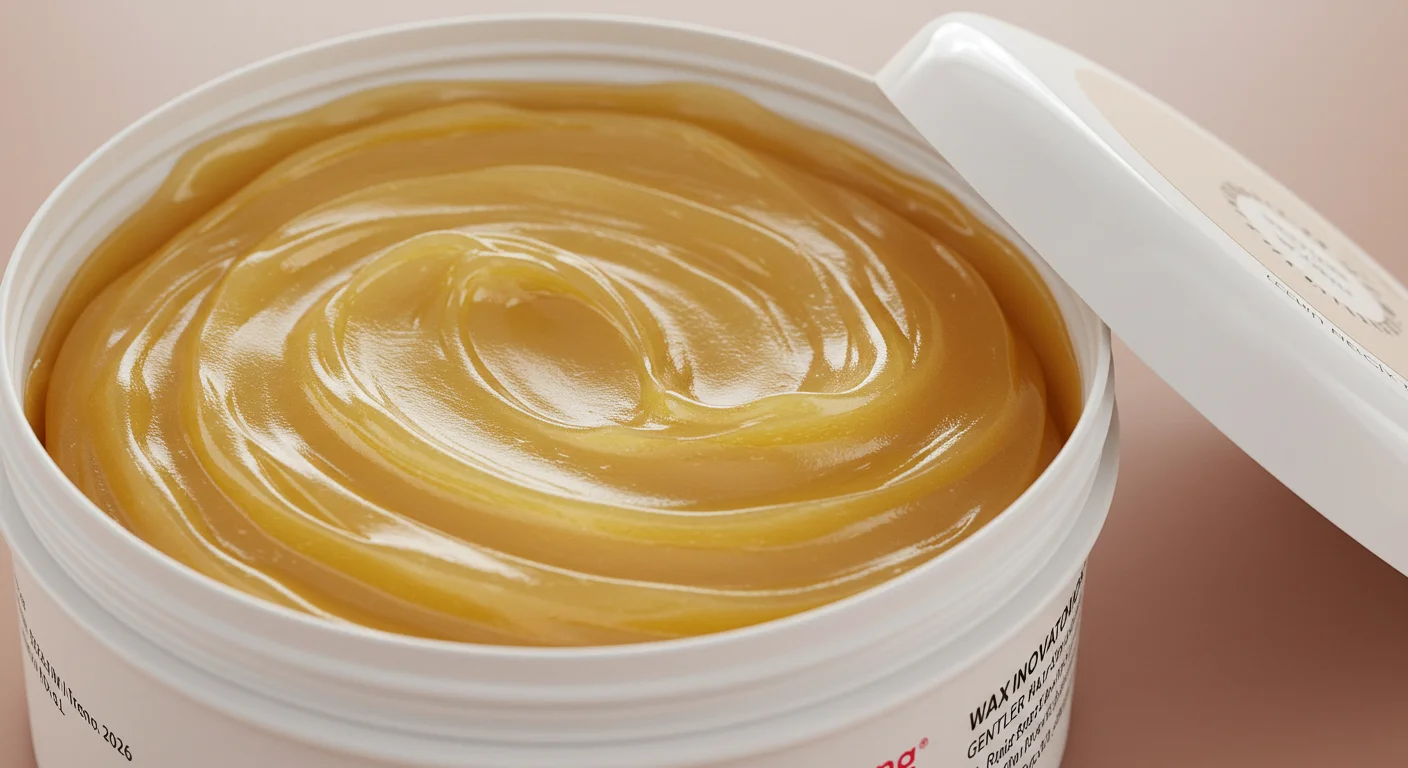
Once the wax has set (refer to the screenshot above for visual guidance on the optimal texture), it’s time for removal. This is where technique makes all the difference for a no sting wax experience. First, stretch the skin taut around the wax strip with one hand. This minimizes skin movement and reduces discomfort. With the other hand, grip the thick “lip” of the wax. Then, with a quick, decisive motion, pull the wax off against the direction of hair growth, keeping it as close to the skin as possible. Do not pull upwards; pull parallel to the skin. The faster and more confident the pull, the less painful it will be.
Immediately after removing the wax, apply firm pressure with your hand to the freshly waxed area. This simple act helps to calm the nerve endings and reduces the stinging sensation significantly. It’s a trick I learned early in my career at a high-end spa in Buckhead, Atlanta, and it truly makes a world of difference for clients with reactive skin.
Common Mistake: Pulling slowly or pulling upwards. This causes unnecessary tugging on the skin, leading to more pain and potential bruising.
6. Post-Wax Soothing: Calming the Skin
The moments immediately after waxing are critical for preventing irritation and ingrown hairs. Start by removing any residual wax with a specialized post-wax oil or cleanser. I prefer oils as they are more nourishing for sensitive skin. Follow this with a soothing, anti-inflammatory product. Look for ingredients like aloe vera, chamomile, calendula, or even a mild hydrocortisone cream if your skin is particularly reactive. Brands like Tend Skin Solution (for ingrowns) and PFB Vanish Chromabright (for ingrowns and hyperpigmentation) are excellent for preventing bumps and discoloration.
For a specific case study, I worked with a client who had severe folliculitis after every waxing session. We implemented a strict post-wax routine: immediately after waxing, a cold compress for 5 minutes, followed by a thin layer of 1% hydrocortisone cream twice a day for two days, and then daily application of a salicylic acid-based ingrown hair serum (like First Aid Beauty’s Ingrown Hair Pads) starting 24 hours post-wax. Within three months, her folliculitis was virtually eliminated, and her skin was smoother than ever. This focused approach, combining immediate soothing with preventative care, was the key.
Avoid hot showers, tight clothing, heavy exercise, and direct sun exposure for at least 24-48 hours post-wax. These activities can exacerbate irritation and clog newly opened pores. Think of your skin as having run a marathon; it needs gentle recovery. For more tips on post-wax relief, check out our guide on smoother skin. Another great ingredient for aftercare is allantoin aftercare, which can soothe post-wax trauma.
Achieving a smooth, comfortable waxing experience with sensitive skin is absolutely possible with the right products and meticulous technique. It’s about being proactive, understanding your skin’s unique needs, and treating it with the care it deserves. Embrace these steps, and you’ll find that waxing without the sting isn’t just a dream, it’s a reality.
What is the best type of wax for sensitive skin?
The best type of wax for sensitive skin is hard wax (also known as stripless wax). It adheres only to the hair, not the skin, significantly reducing irritation and discomfort compared to traditional soft waxes.
How can I prevent redness and bumps after waxing sensitive skin?
To prevent redness and bumps, ensure proper skin preparation (cleansing and pre-wax oil), use a gentle hard wax, apply and remove the wax correctly, and follow up with soothing post-wax products containing ingredients like aloe vera or hydrocortisone. Avoid heat and friction for 24-48 hours post-wax.
Is it necessary to use pre-wax oil?
Yes, for sensitive skin, using a thin layer of pre-wax oil is highly recommended. It creates a protective barrier between the wax and your skin, preventing the wax from adhering directly to skin cells and minimizing discomfort during removal.
How often should someone with sensitive skin wax?
For sensitive skin, waxing every 4 to 6 weeks is generally ideal. This allows hair to grow to the optimal length (about 1/4 inch) and gives the skin sufficient time to recover between sessions, reducing the risk of irritation.
Can I wax if I have a skin condition like eczema or psoriasis?
It is generally not recommended to wax over active patches of eczema, psoriasis, or any broken or inflamed skin. Waxing can exacerbate these conditions. Always consult with a dermatologist before waxing if you have a chronic skin condition to ensure it’s safe for your specific situation.


